 New
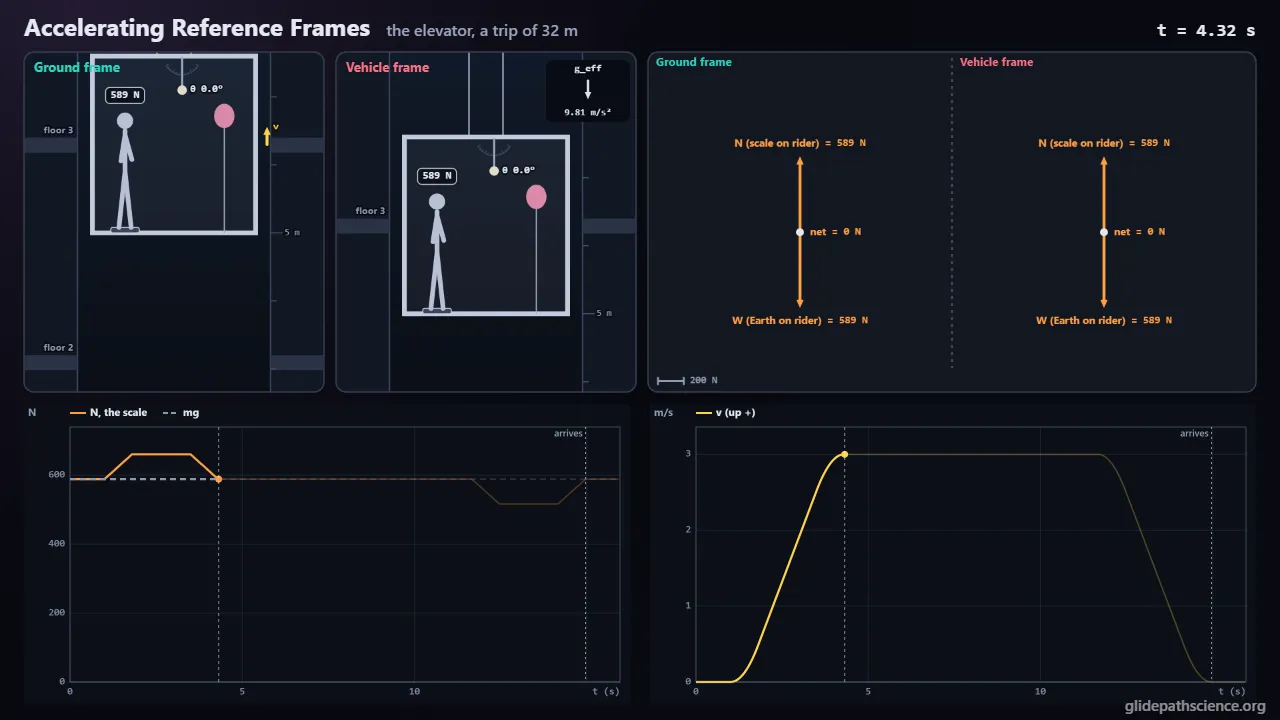
Accelerating Reference Frames
Ride an elevator on a bathroom scale and drive a van with a plumb bob, a balloon and coffee, seen from the ground and from inside: apparent weight, fictitious forces, effective gravity and rotating frames.
Subject
Motion, forces, energy, momentum, and frames of reference.
NewRide an elevator on a bathroom scale and drive a van with a plumb bob, a balloon and coffee, seen from the ground and from inside: apparent weight, fictitious forces, effective gravity and rotating frames.
 New
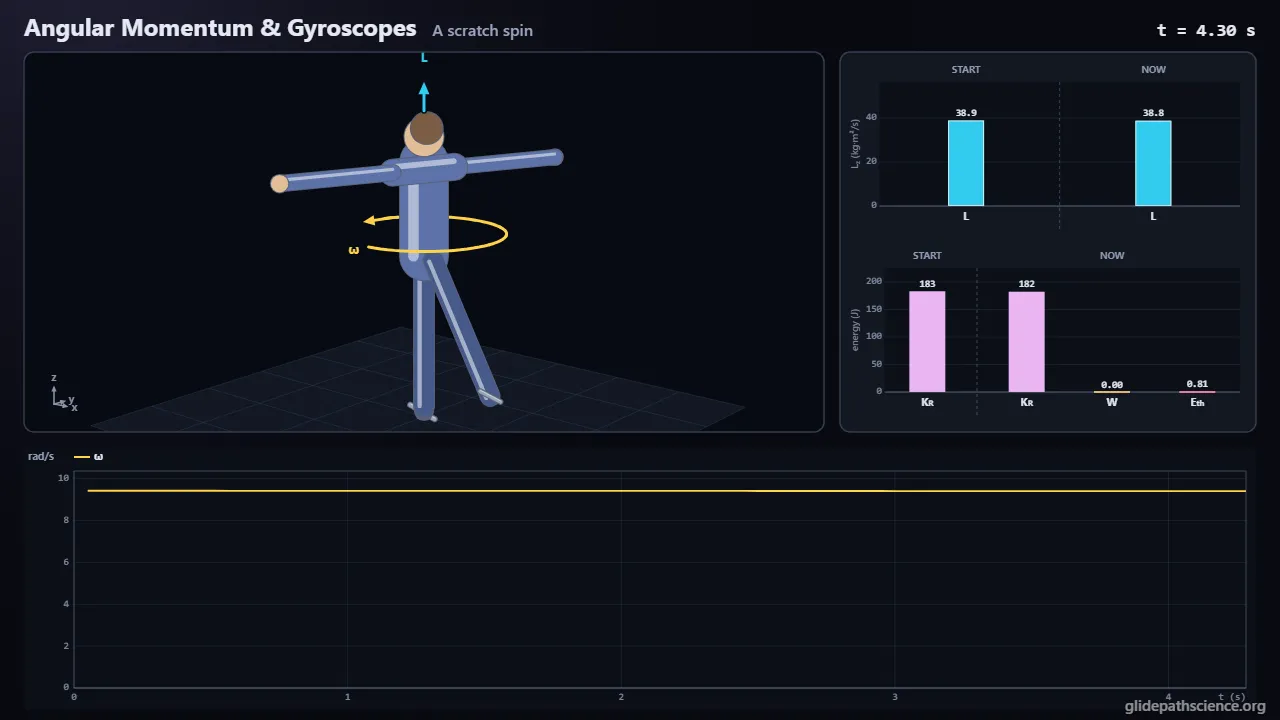
Spin a skater, flip a wheel on a turntable and release a gyroscope: angular momentum is conserved, a torque turns it into precession, and pilots fly by gyro instruments.
 New
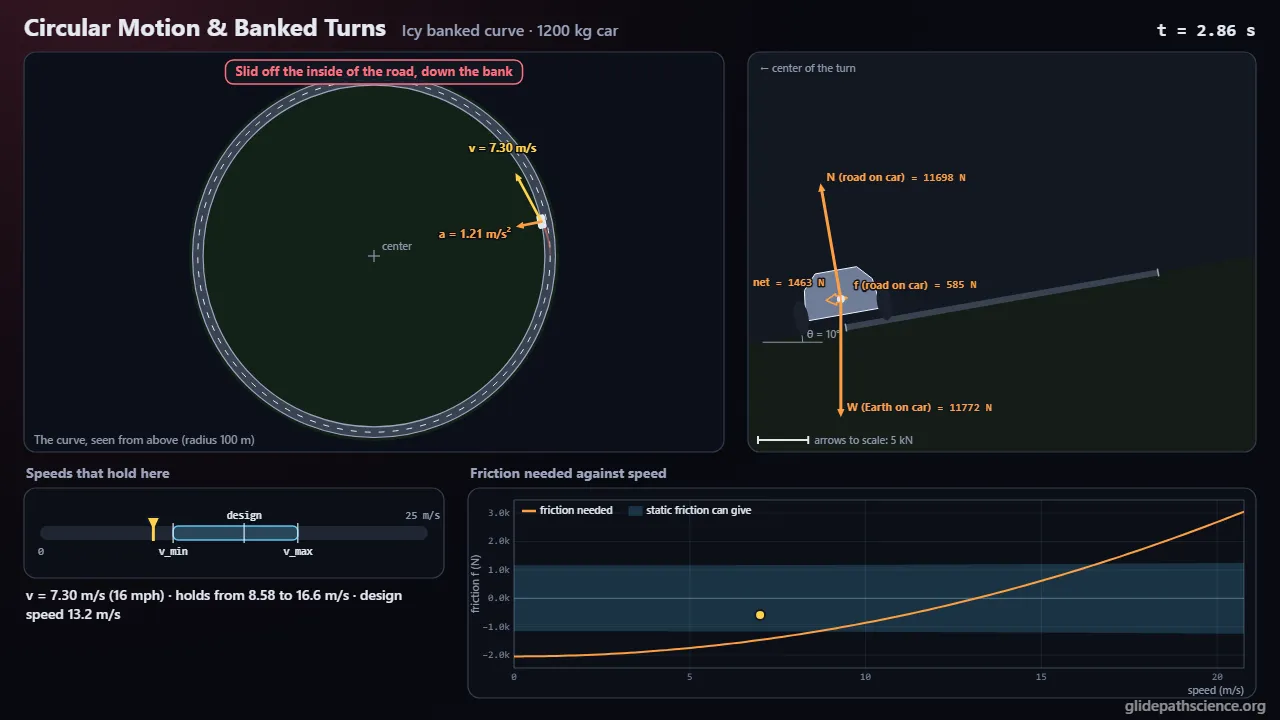
Every turn needs a net force toward the center. Whirl a puck, swing a cone, ride a vertical circle and a rotor, and find the window of safe speeds on flat and banked curves, all from the ground.
 New
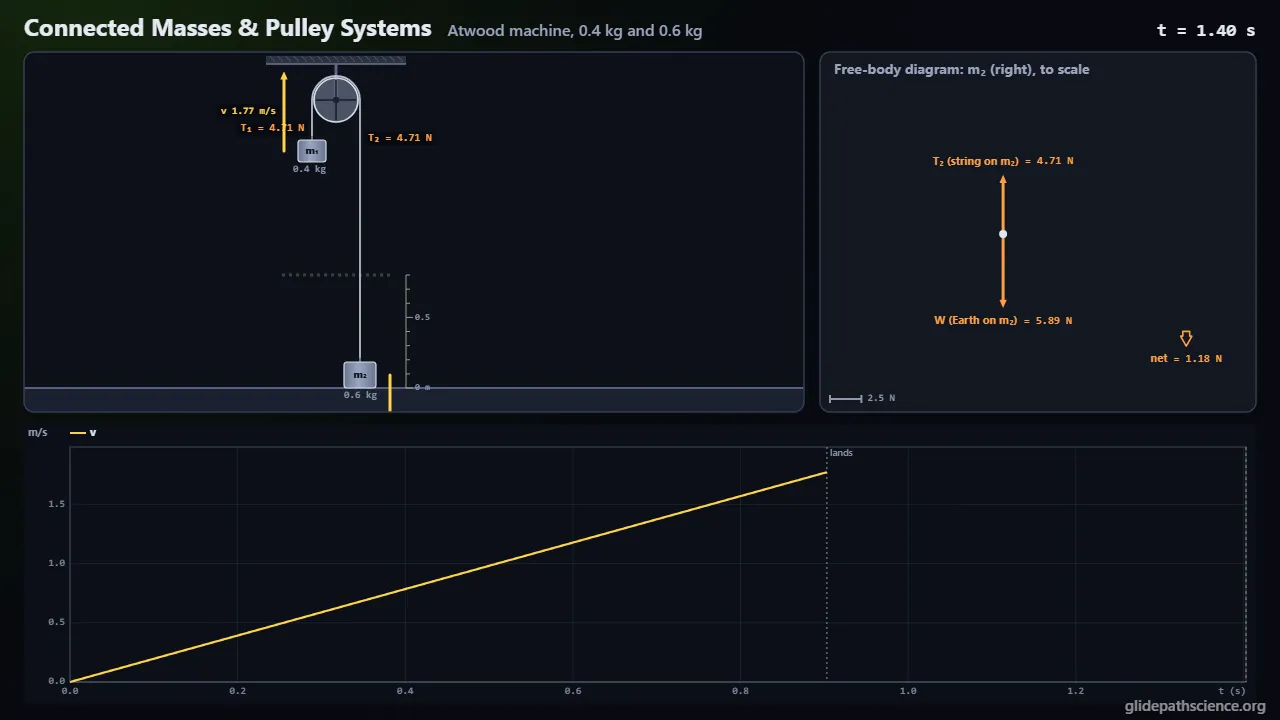
Hang masses over pulleys: Atwood machines, a train of carts, blocks pulled across tables and up ramps, heavy pulleys with unequal tensions, block and tackle, and a lab bench that measures g.
 New
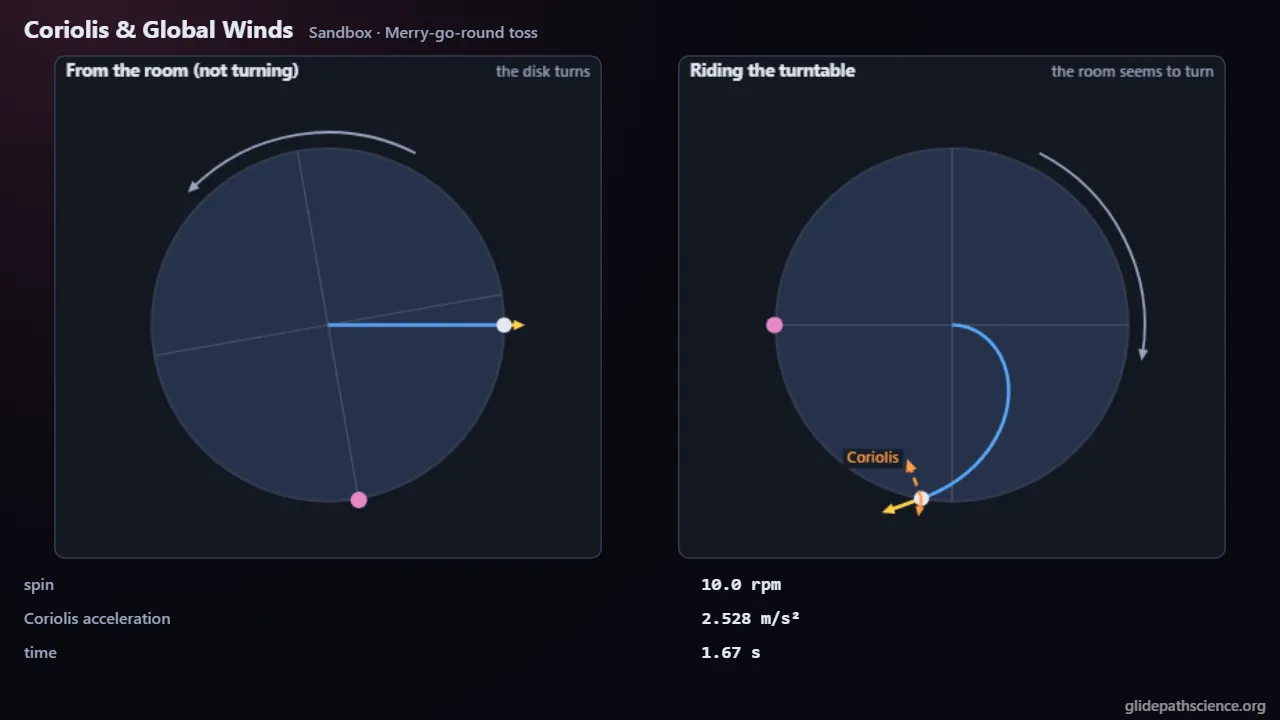
Watch a puck from the room and from a spinning turntable, then let air feel a pressure gradient and the Coriolis effect until it blows along the isobars, and see why storms spin.
 New
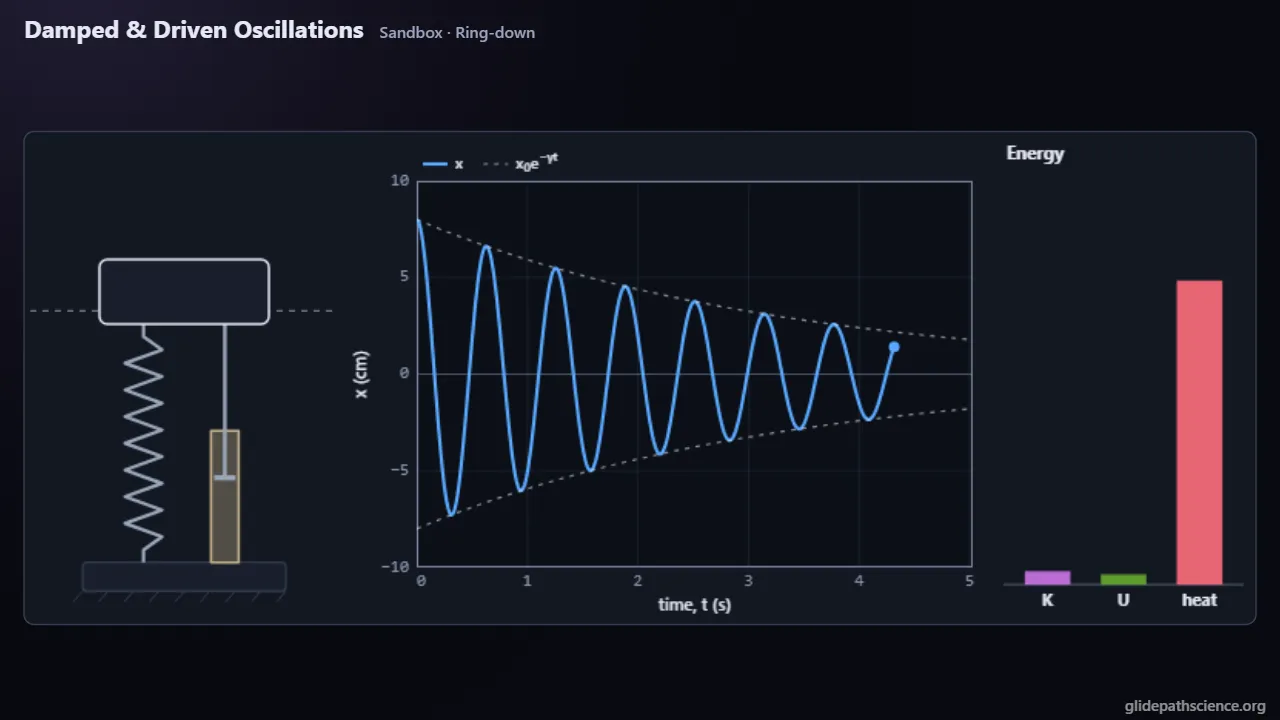
Ring down a block and a car’s suspension with light, critical and heavy damping, then drive them through resonance to see the phase, the peak’s height, where the energy goes and how mounts isolate vibration.
 New
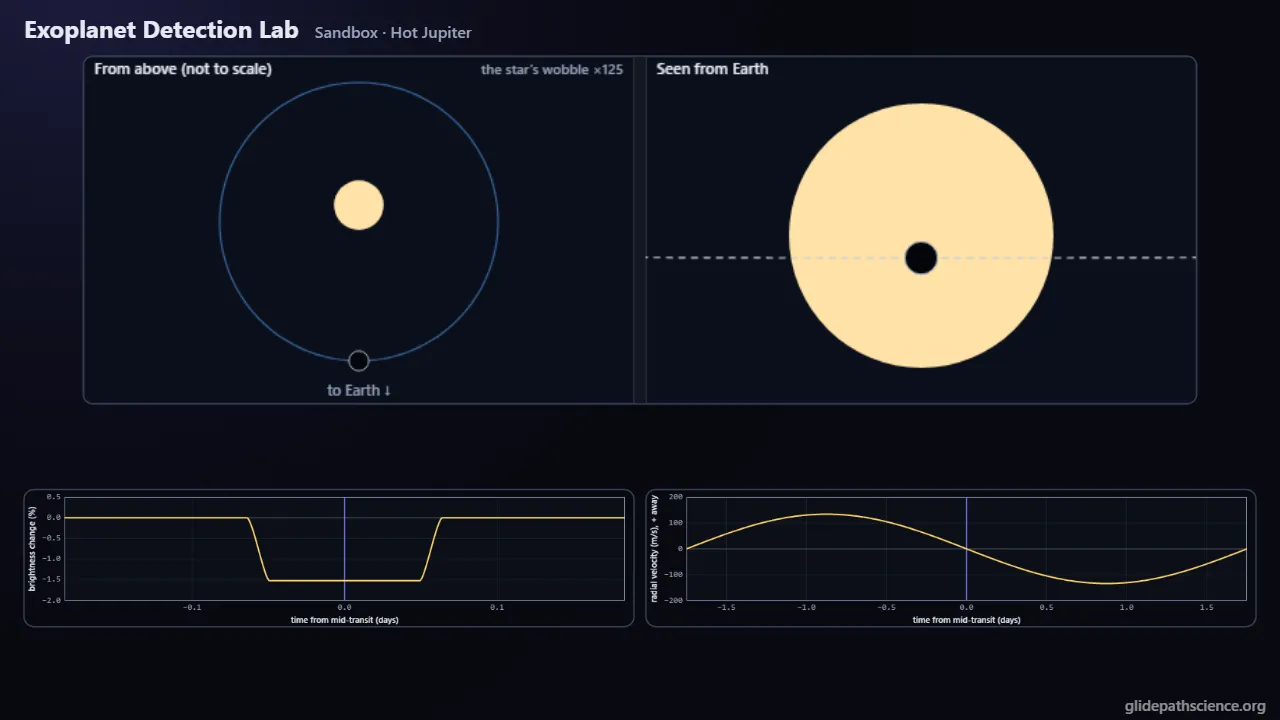
Watch a planet dim its star and make it wobble, read its size from the transit and its mass from the Doppler shift, fit noisy data, and hunt for planets among eclipsing binaries.
 New
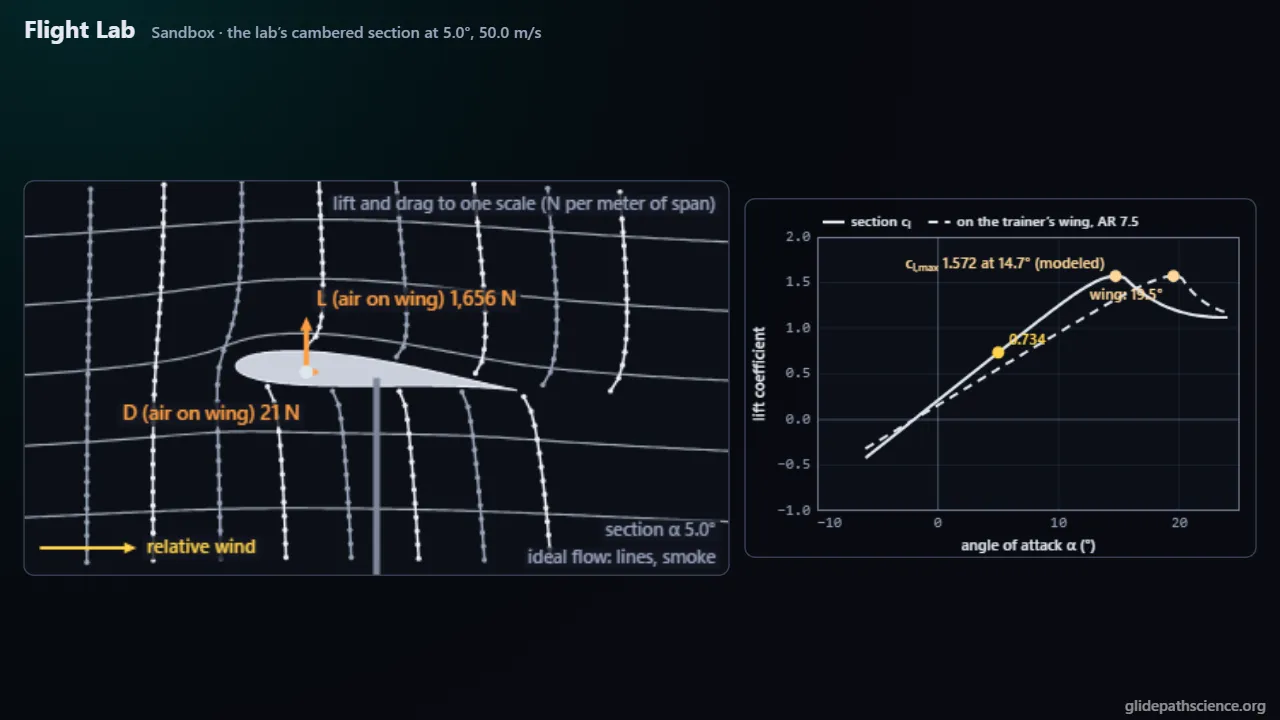
Fly a wing through smoke, raise its angle of attack until the flow lets go, find the speed of least drag, and take an illustrative trainer off a hot, high runway: the same indicated airspeed, a much longer roll.
 New
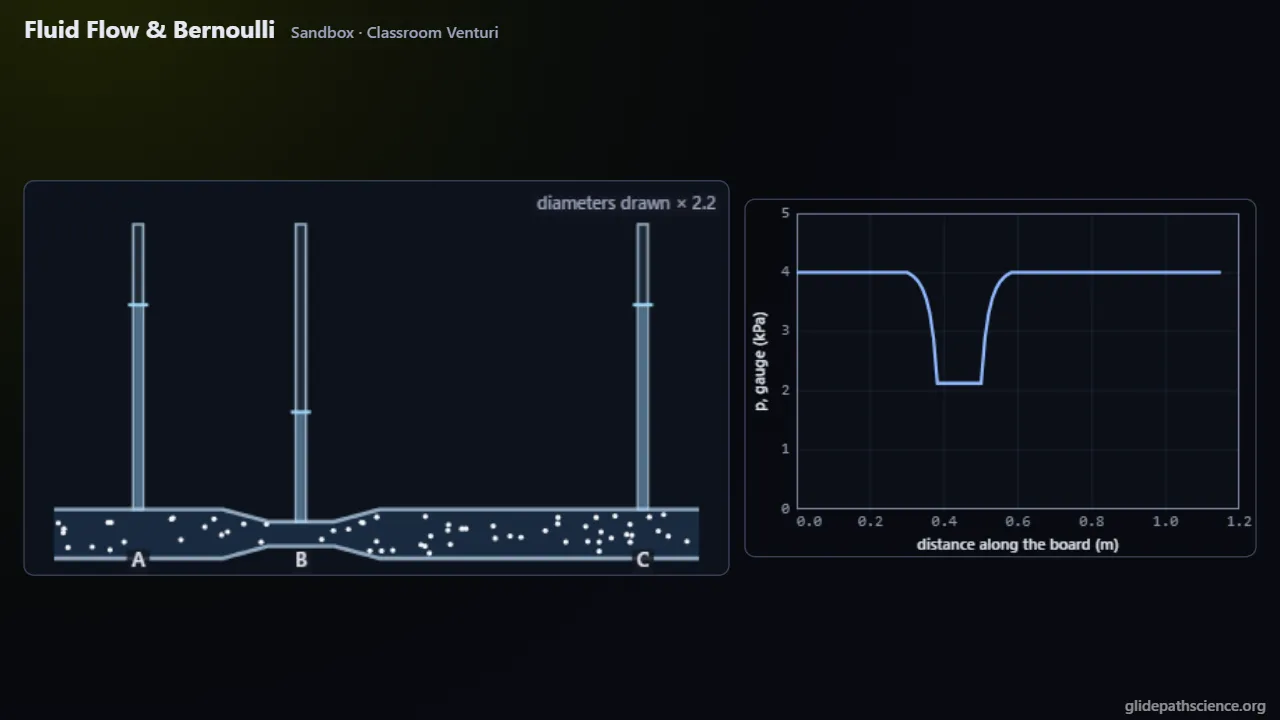
Push water through pipes and constrictions: continuity speeds it up, Bernoulli’s equation lowers its pressure, meters read flow and airspeed, and a narrowed artery costs pressure.
 New
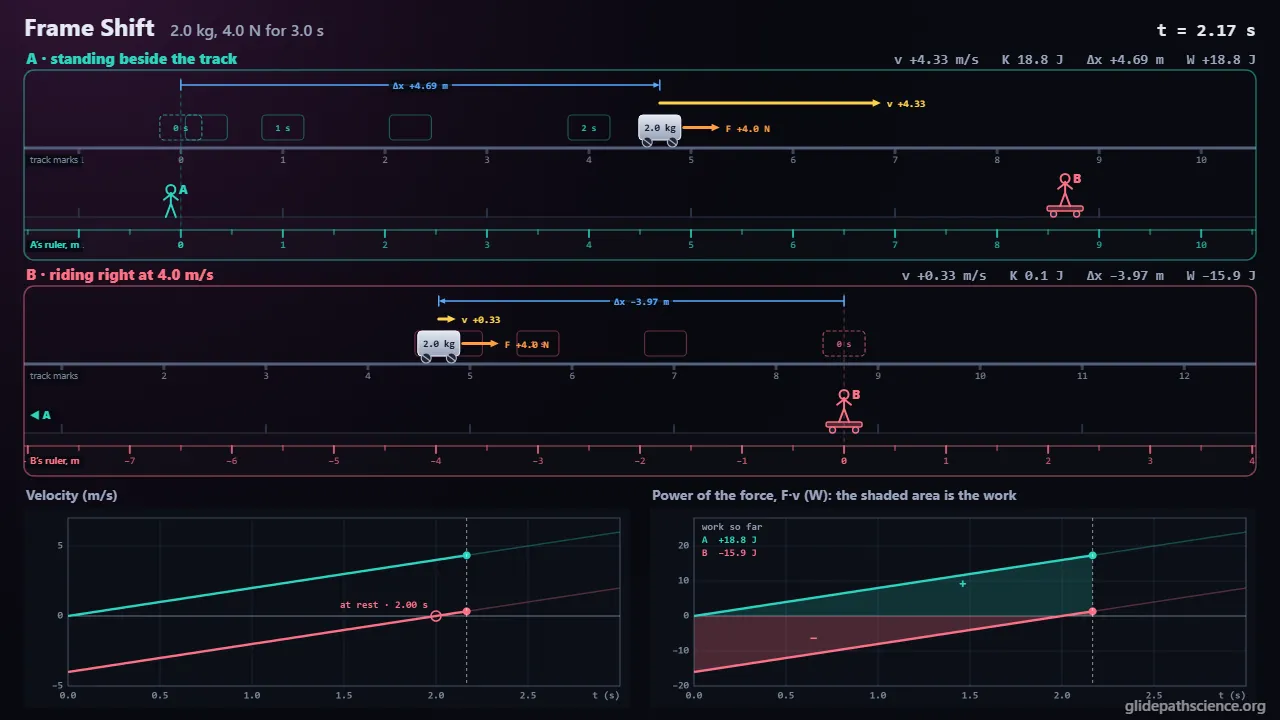
One cart, one push, two observers: see why velocity, displacement, kinetic energy, and work depend on the frame, while the work-energy theorem holds for every inertial observer.
 New
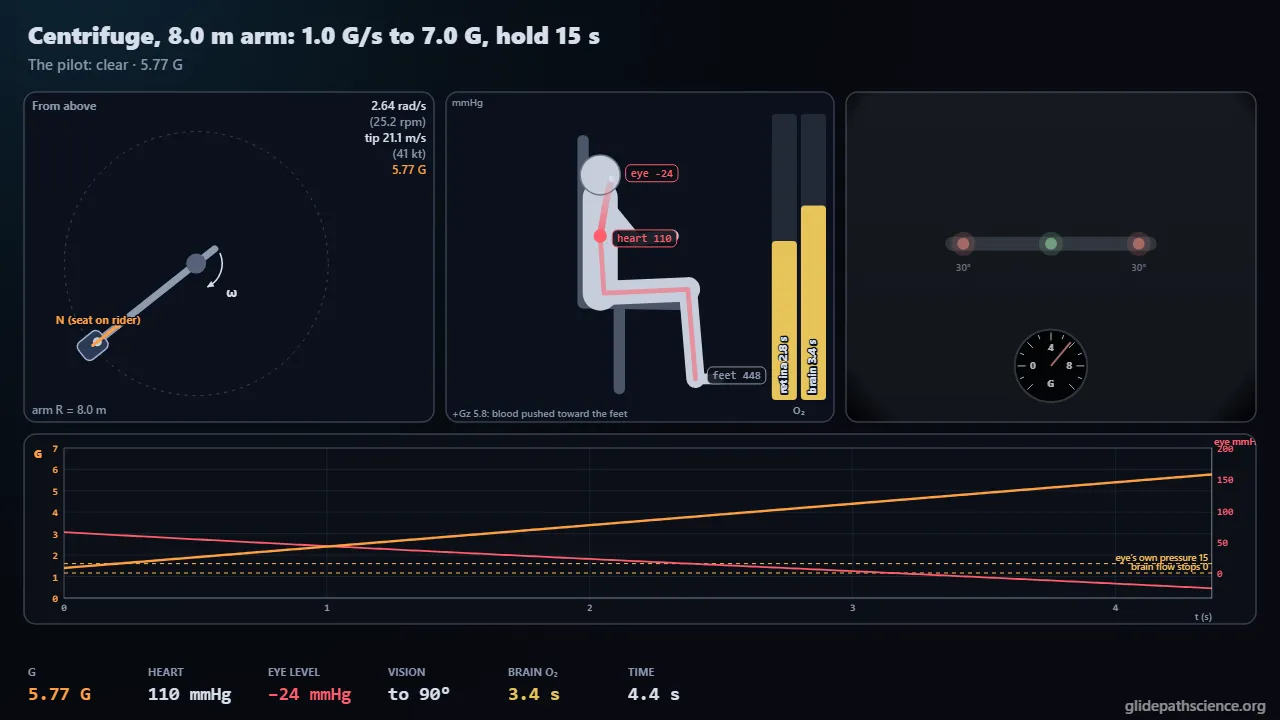
Spin a pilot in a centrifuge or fly a tight turn: the G from bank, speed, and radius; the blood pressure left at eye level; gray-out, blackout, and G-LOC in order; and what a G-suit, straining, and a reclined seat add.
 New
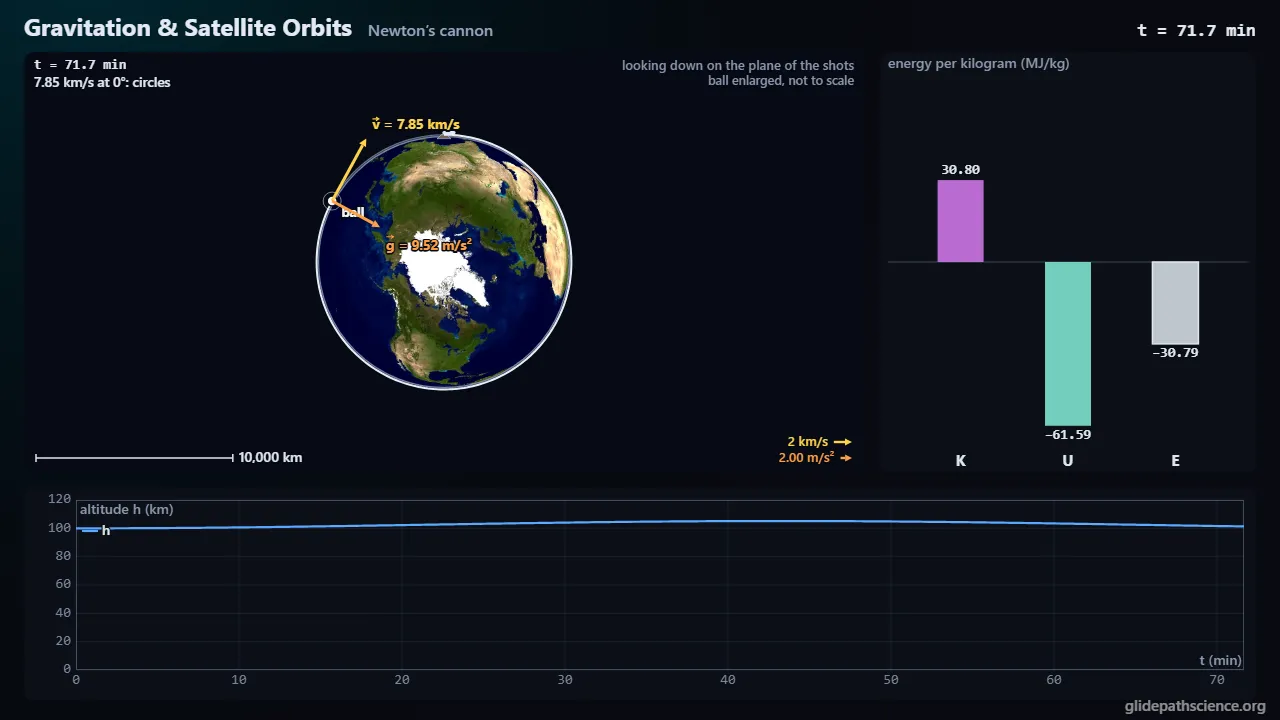
Fire Newton’s cannon faster and faster until the ball falls around the Earth: g with height and depth, orbital speed and period, geostationary orbits, escape, ellipses, Hohmann transfers, and G from a torsion balance.
 New
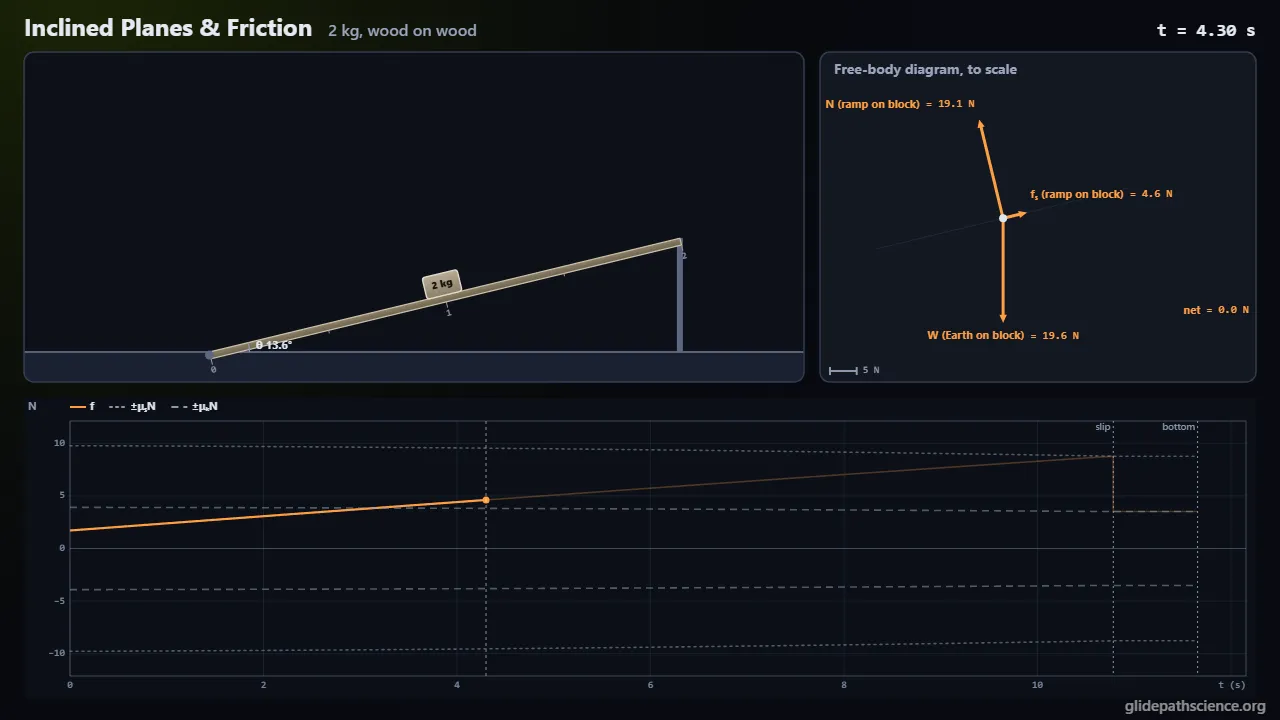
Tilt a ramp until the block lets go: static and kinetic friction, the slipping angle, pushes up and down the slope, a ramp that just holds, stick-slip and rolling, all from one exact engine.
 New
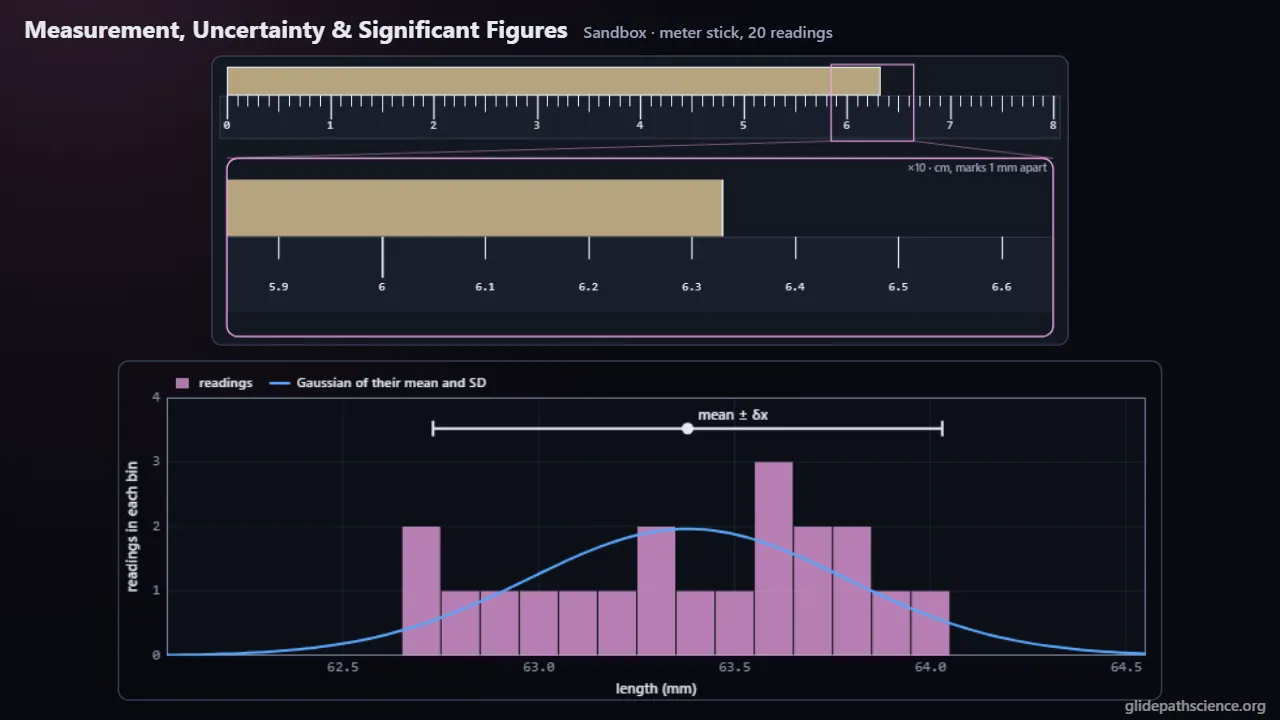
Read a ruler, a vernier caliper, a micrometer and a stopwatch, repeat the readings, and carry their uncertainty through a formula to see what significant figures mean and when two results agree.
 New
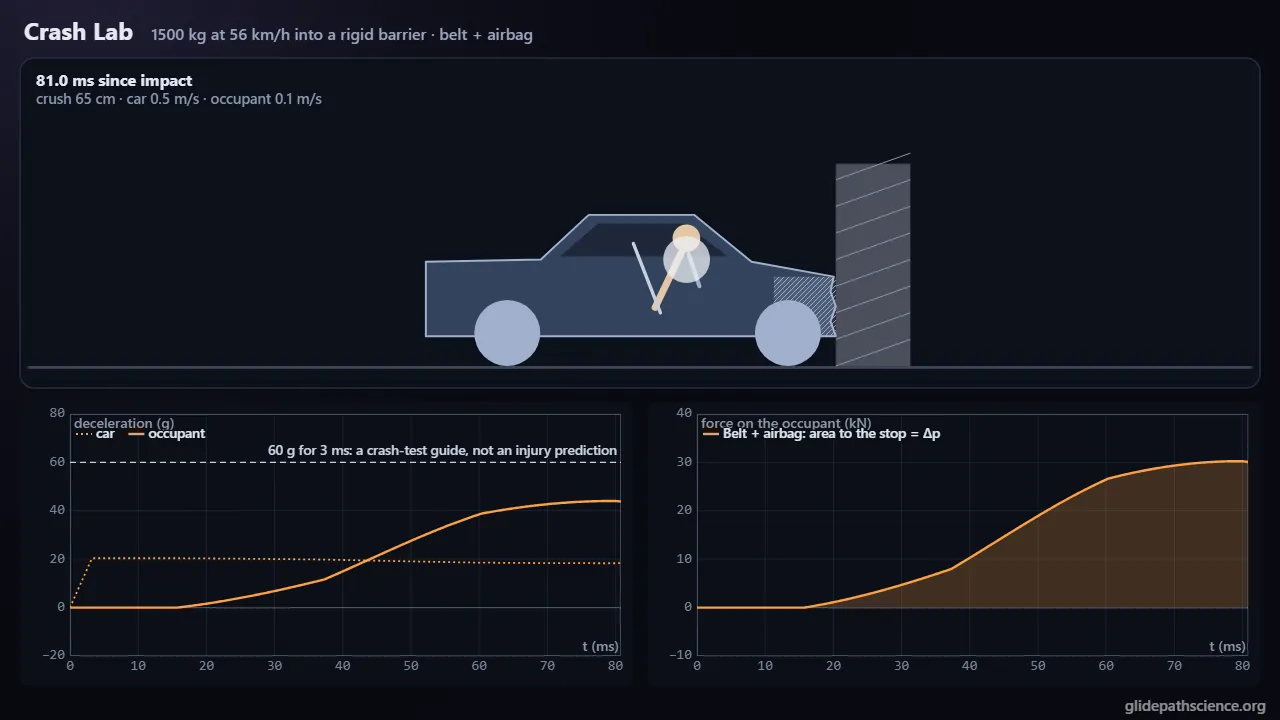
Collide carts and pucks from elastic to perfectly inelastic: total momentum holds while kinetic energy goes. Read impulse as the area under F(t), and see how crumple zones and belts spread the same Δp.
 New
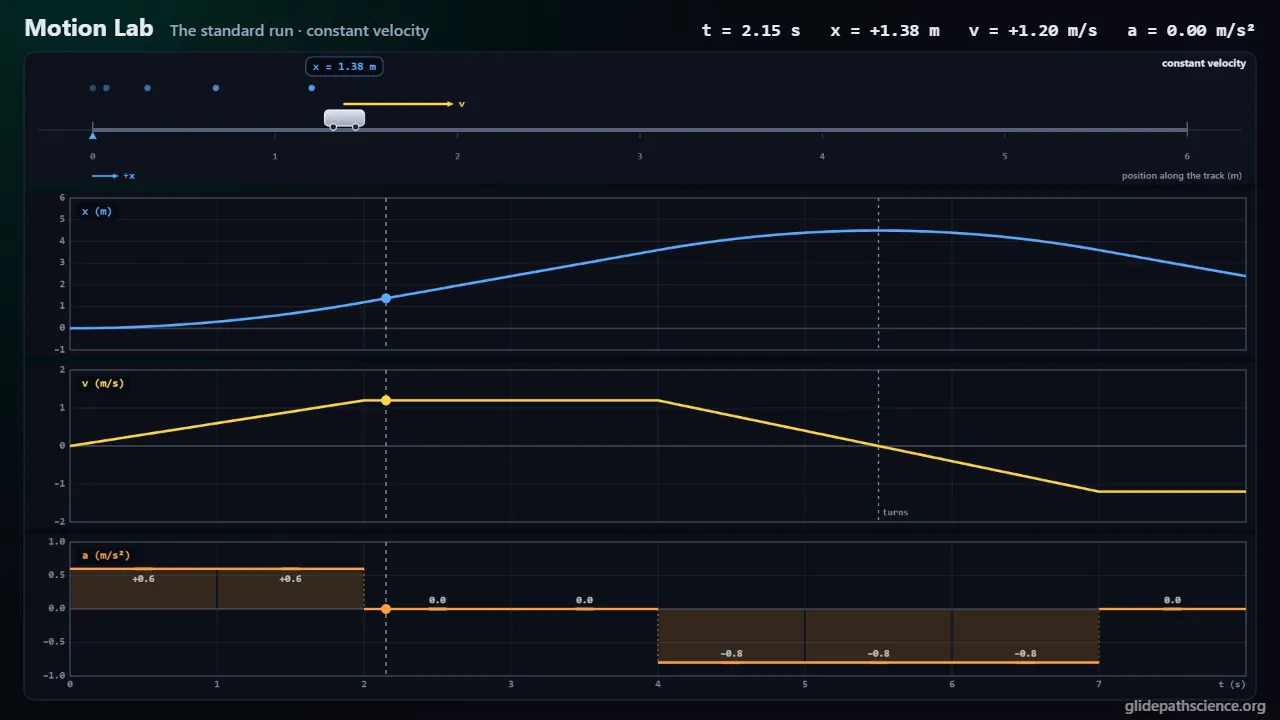
One cart and three synchronized graphs: build a motion from its acceleration, read slopes and areas, match graphs by moving, and see why a motion detector's velocity and acceleration come out noisy.
 New
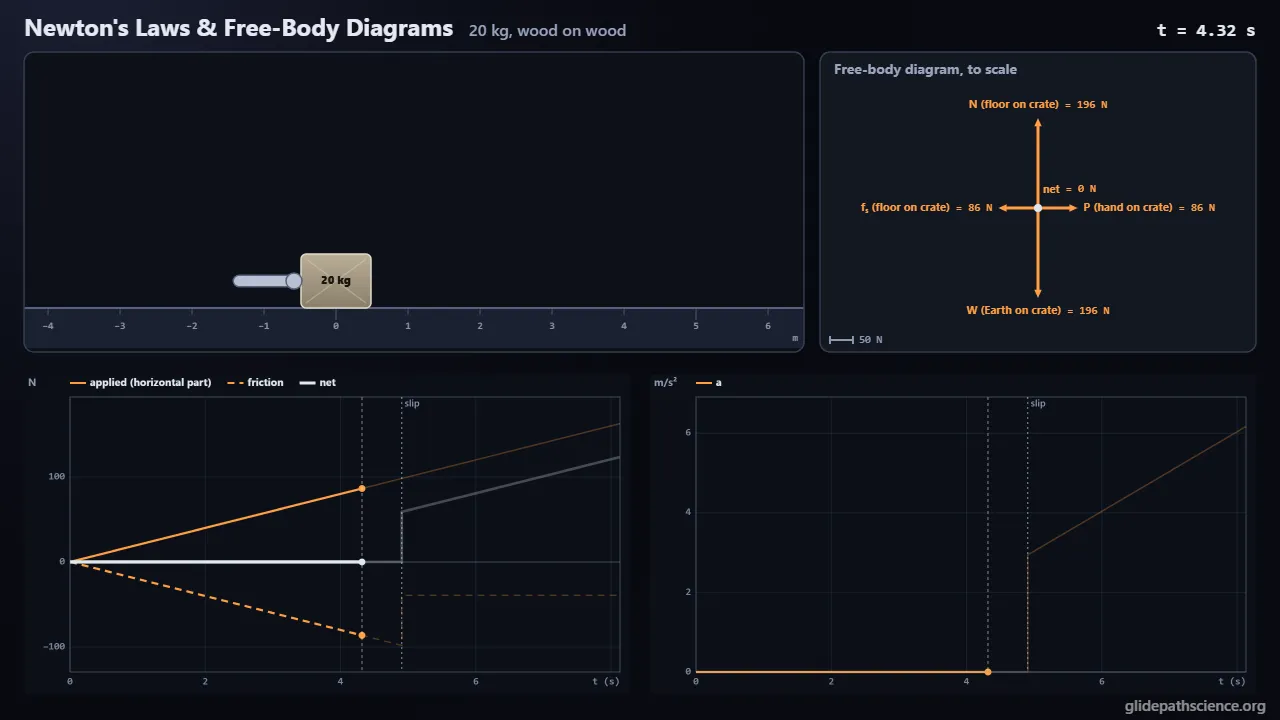
Push a crate, lift a bucket and jump on a force plate: name every force by its interaction, watch static friction match a push until it slips, and find the partner of every force.
 New
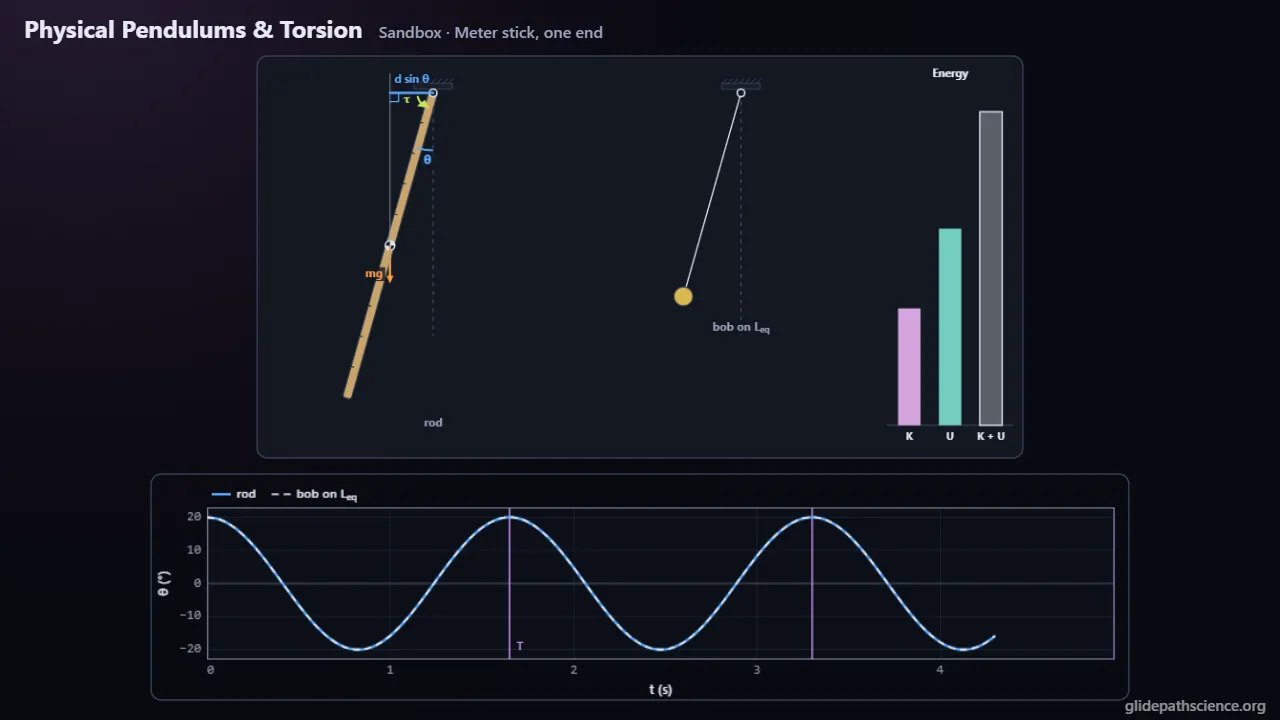
Swing rods, disks and hoops from different pivots to find where each swings fastest, tune a reversible pendulum to measure g, and weigh rotational inertia by twisting a wire.
 New
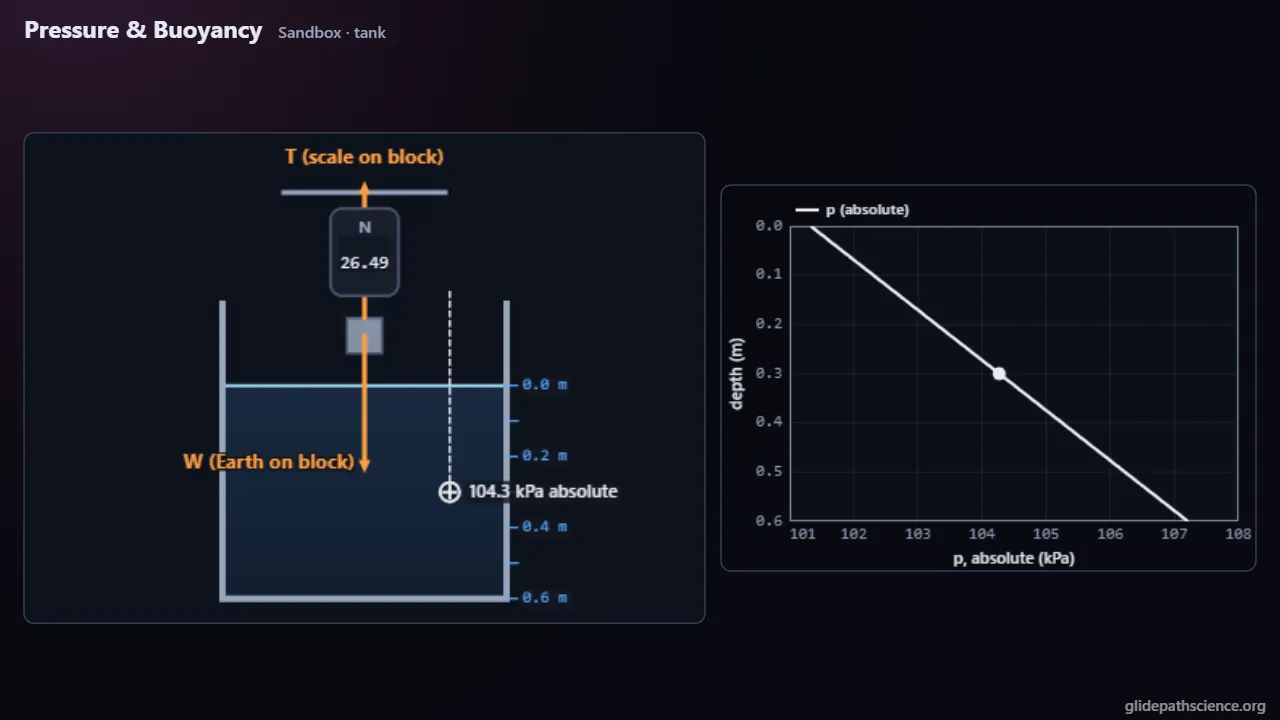
Dive into a tank with a pressure probe, lift a car with a hydraulic press, weigh a crown in water, load a barge to its marks and fly a hot-air balloon: pressure with depth, Pascal’s principle, buoyancy and stability.
 New
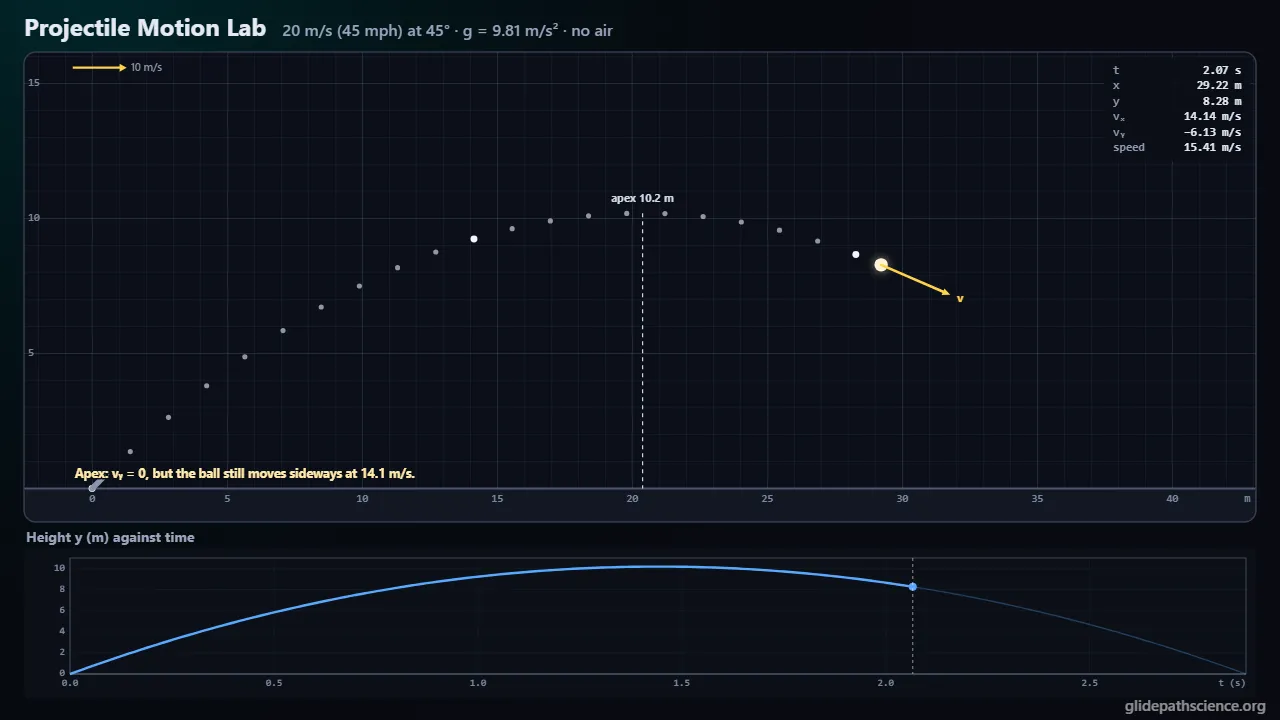
Launch at any speed, angle and height, on Earth, Mars or the Moon, with or without air and wind. Compare paths, see drag pull the best angle below 45°, hit targets, and fit a launch to video data.
 New
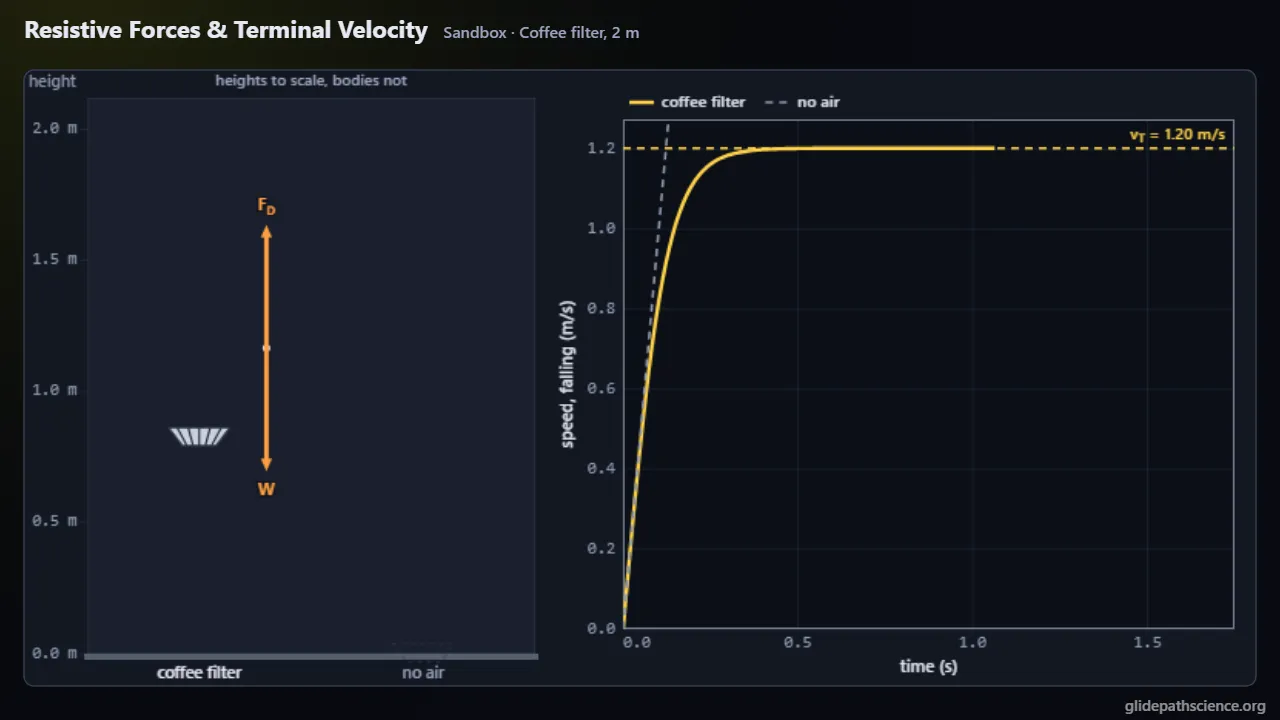
Drop a coffee filter, a steel ball, a raindrop or a skydiver and watch drag grow until it balances the weight, then compare linear and quadratic drag and fit the drag law to falling filters.
 New
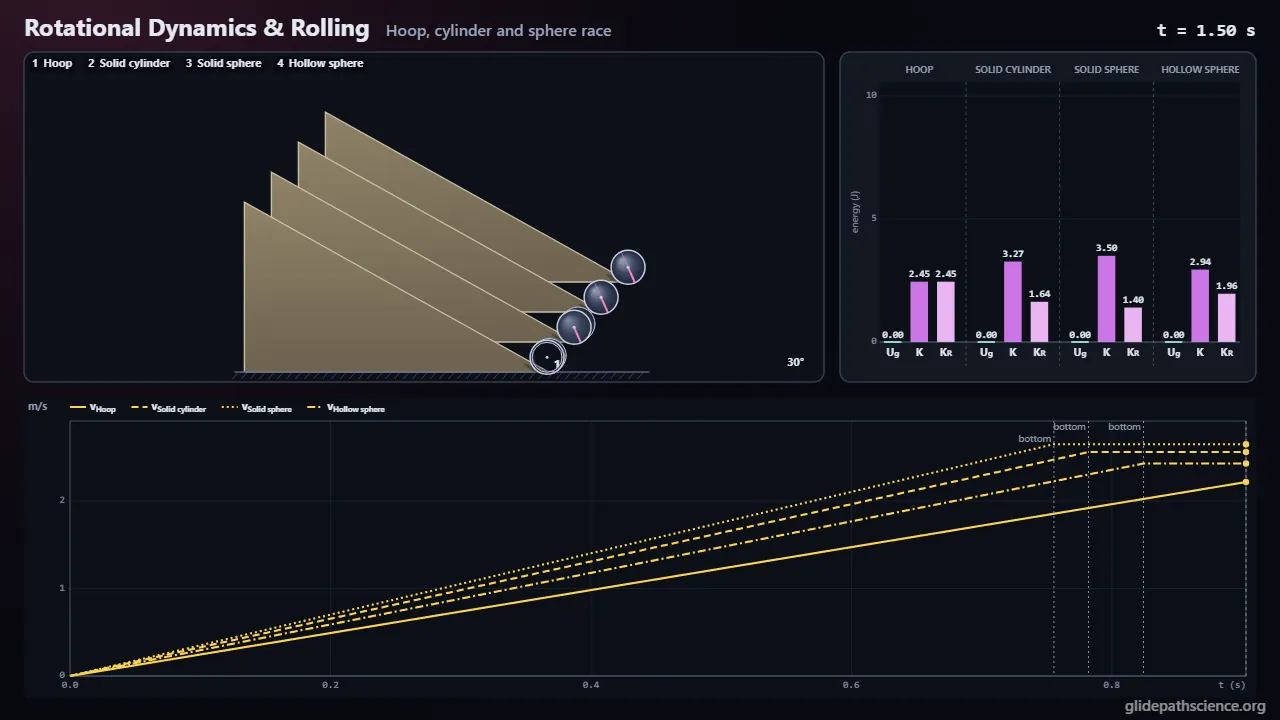
Spin hoops, disks and spheres: torque and angular acceleration, moment of inertia by shape, a heavy pulley, rolling races where the hoop always loses, skids, backspin, a lab bench that measures I and a race track.
 New
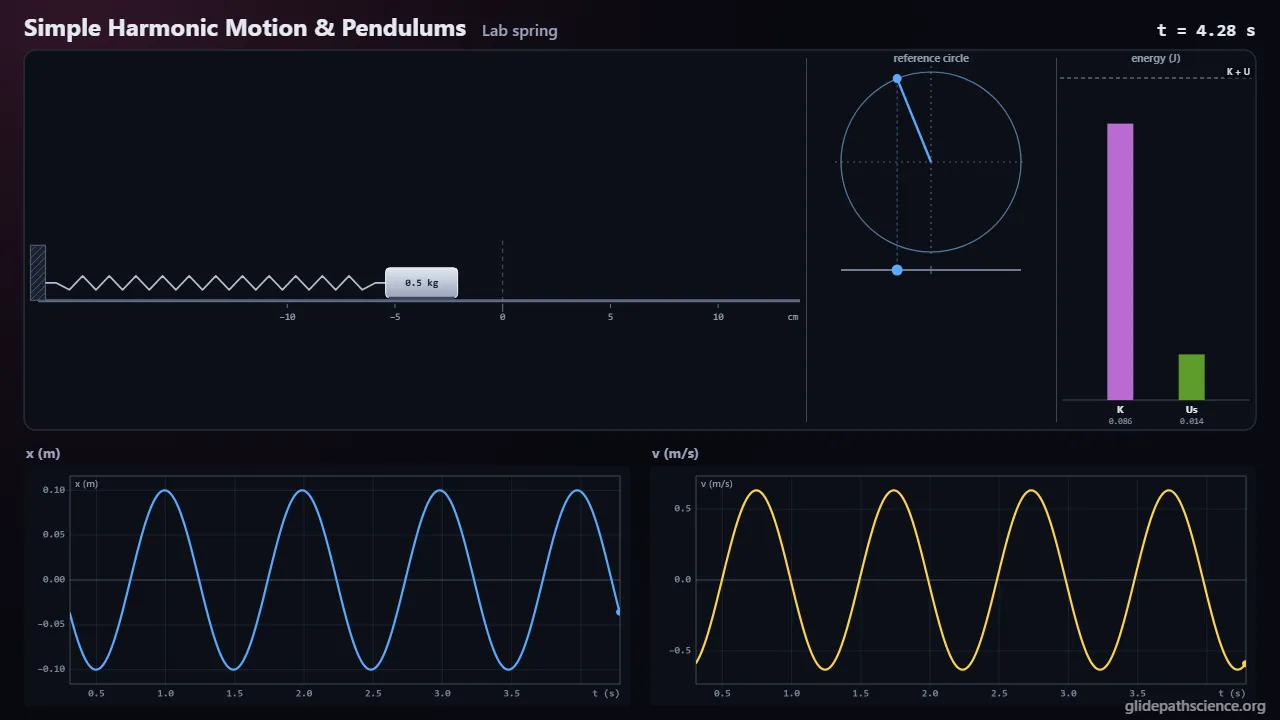
Springs and pendulums keep time: read the period, see SHM as the shadow of circular motion, damp it, drive it to resonance, time a wide-swinging pendulum, and fit noisy sensor data.
 New
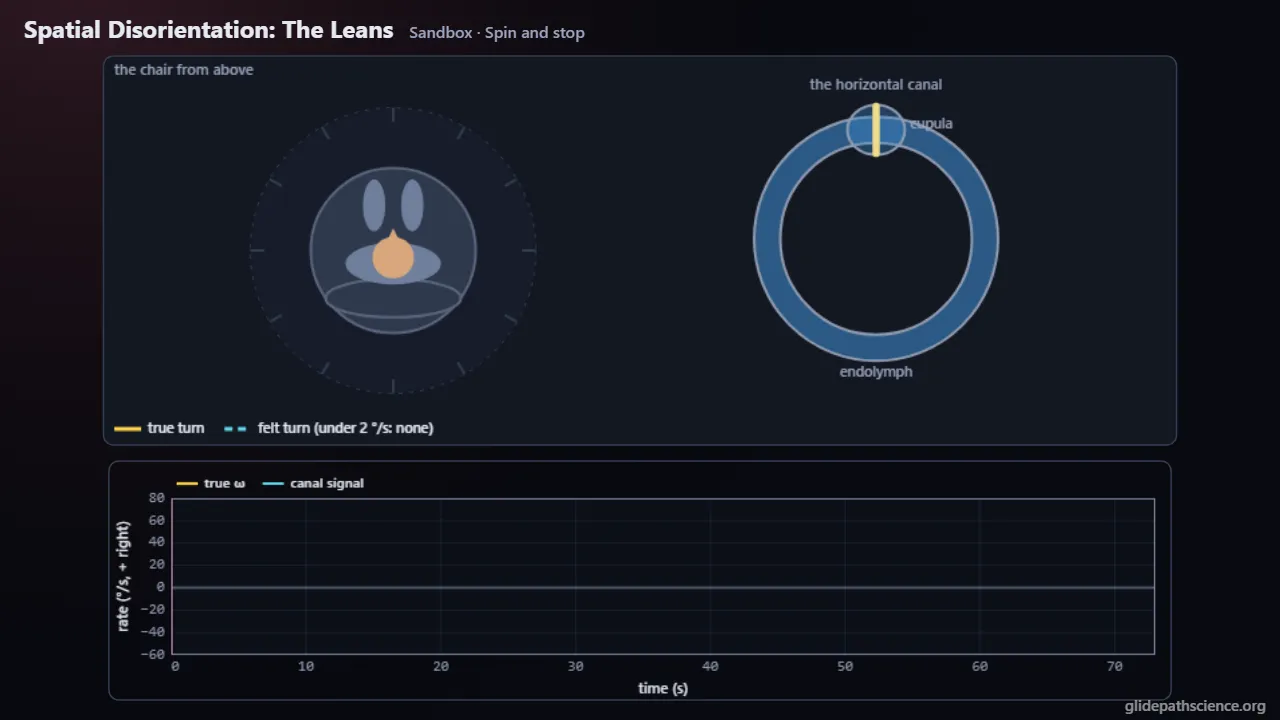
Spin a chair and fly in cloud: the inner ear senses changes in rotation, not rotation, so a steady turn fades, a stop feels like turning back, and leveling the wings brings on the leans.
 New
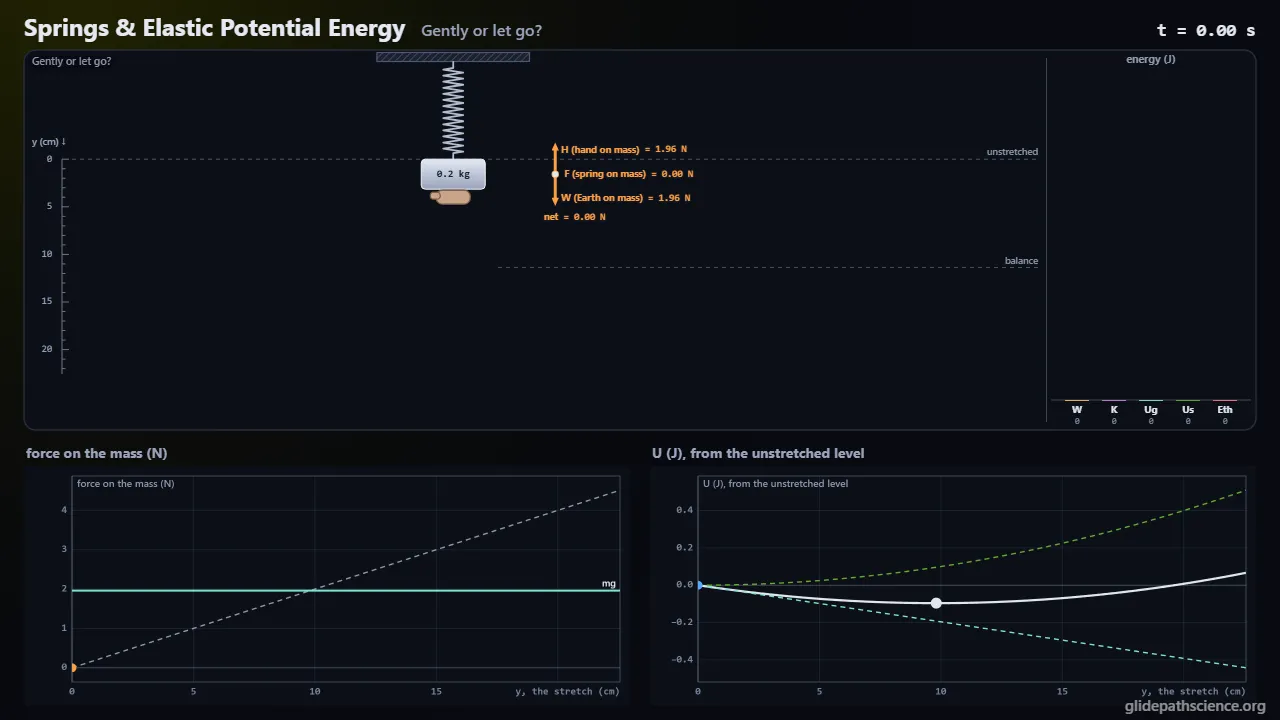
Stretch, combine and hang springs: Hooke's law, series and parallel, energy as the area under F(x), the missing half, potential-energy wells and stability, and what real springs do.
 New
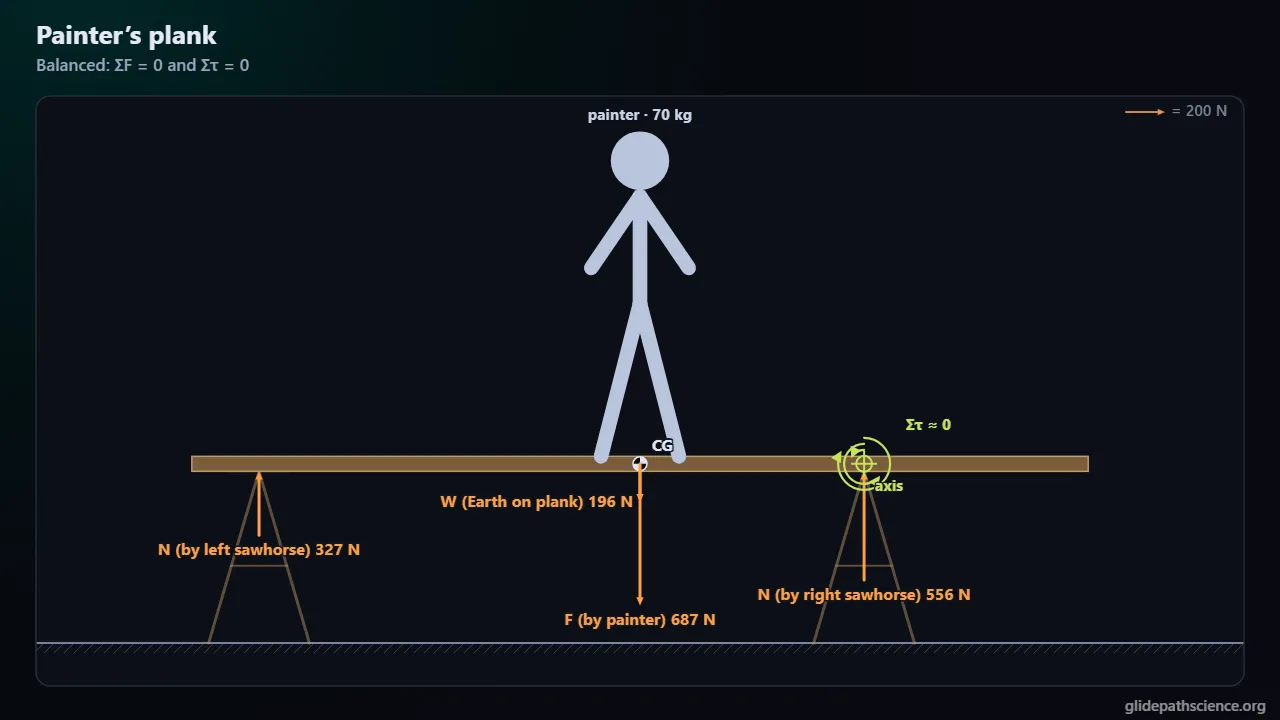
Push a door, balance a seesaw, hang a sign from a strut, climb a ladder until it slips, hold a dumbbell, and load an airplane inside its CG envelope: torque, both equilibrium conditions, and tipping.
 New
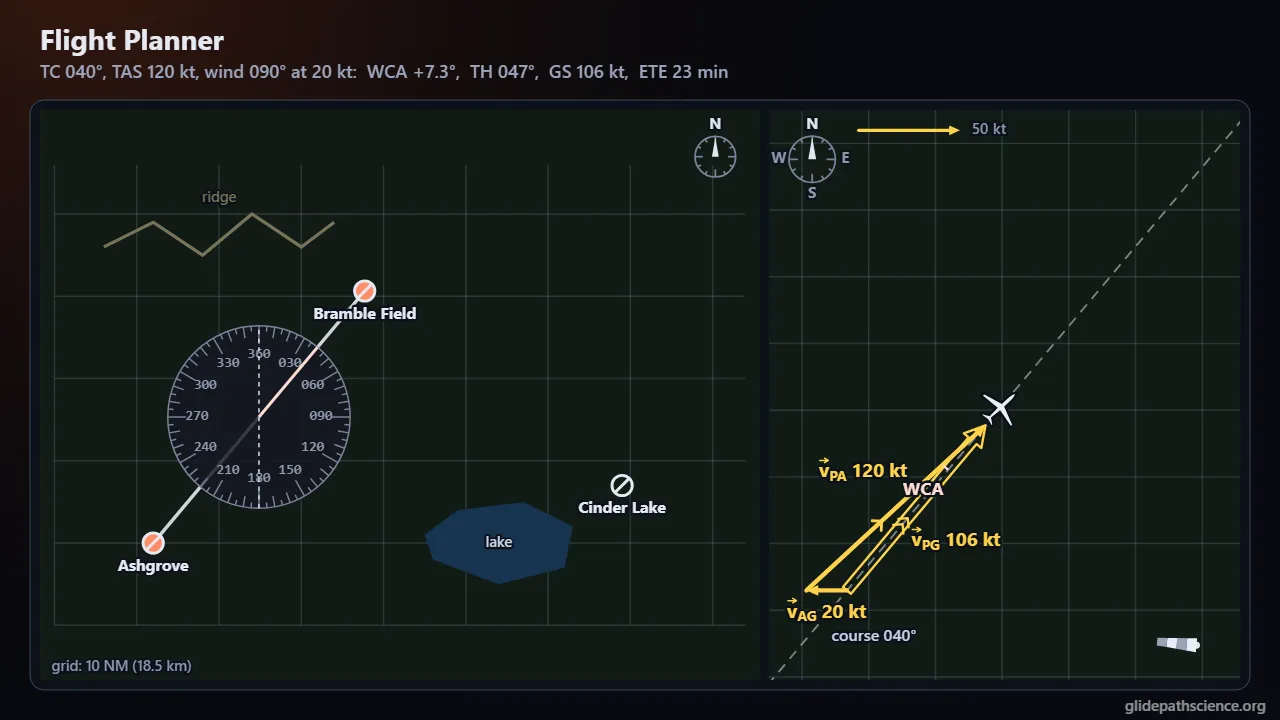
Add and resolve vectors by dragging, then use them: cross a river, watch rain from a moving car, spot a collision course, and plan a flight the way pilots do with the wind triangle.
 New
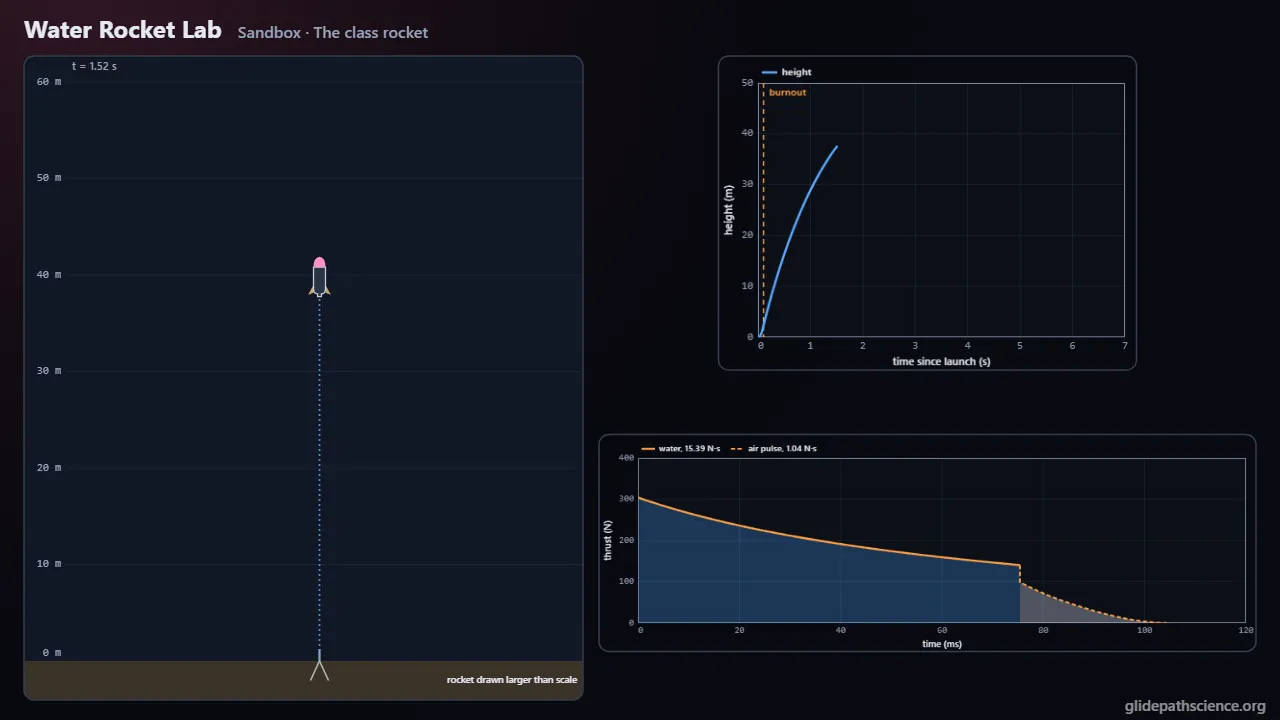
Fill a bottle rocket, pump it up and launch it to see thrust as momentum flow, why the expanding air sets the burn, why there is a best fill, and how drag cuts the climb.
 New
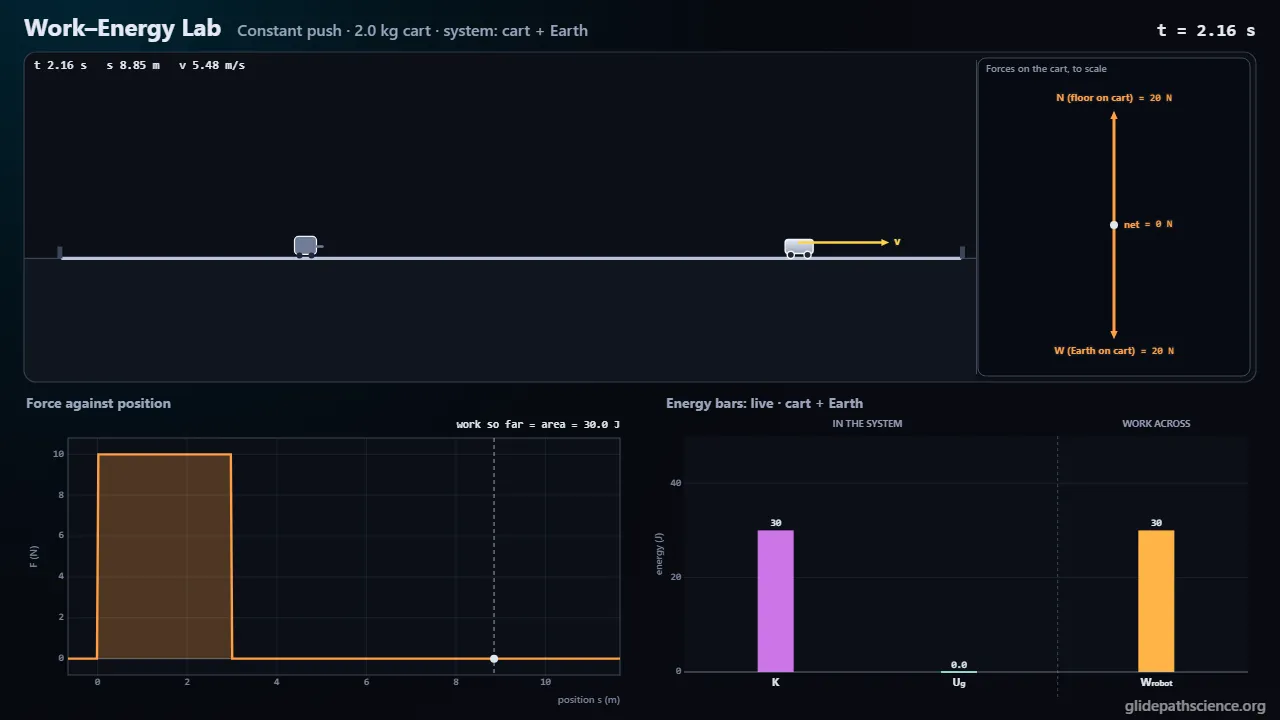
Work as the area under F(x): push a cart with a force you draw, launch it with a spring, stop it with friction, and follow every joule between kinetic, potential and thermal energy in the system you choose.