 New
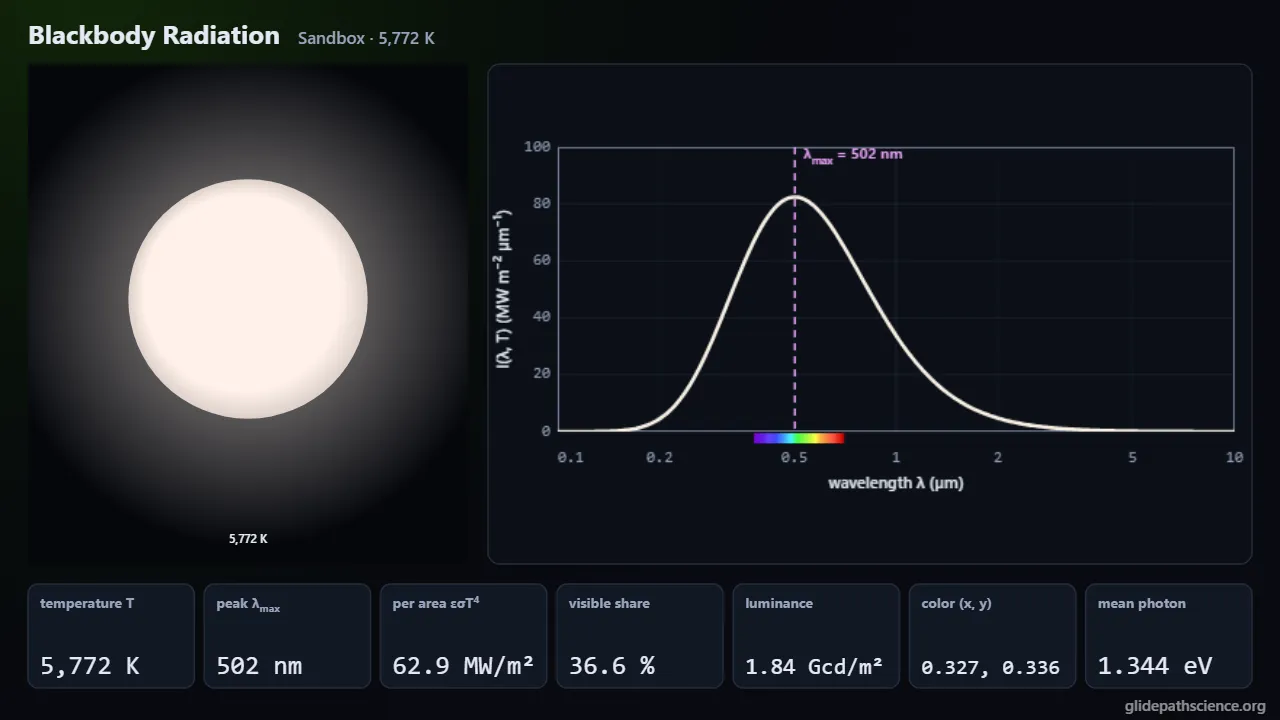
Blackbody Radiation
Heat a body and watch its true color slide from red through white to blue: Wien’s and Stefan’s laws, the ultraviolet catastrophe and Planck’s quanta, a spectrometer bench, stars on an HR diagram, and the CMB.
Subject
Heat, gases, quantum behavior, and atoms.
NewHeat a body and watch its true color slide from red through white to blue: Wien’s and Stefan’s laws, the ultraviolet catastrophe and Planck’s quanta, a spectrometer bench, stars on an HR diagram, and the CMB.
 New
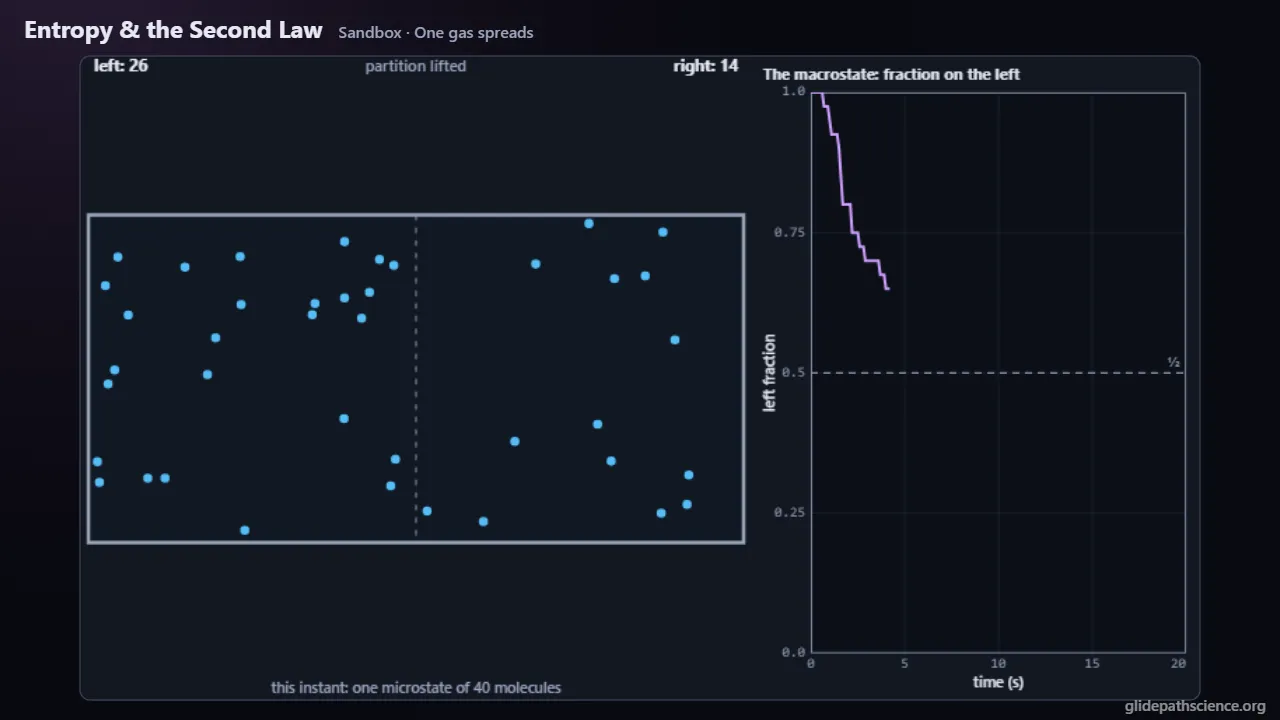
Count the ways coins can land and molecules can sit, watch a gas spread and never come back, let two solids share energy until their temperatures match, and stretch a rubber band that warms.
 New
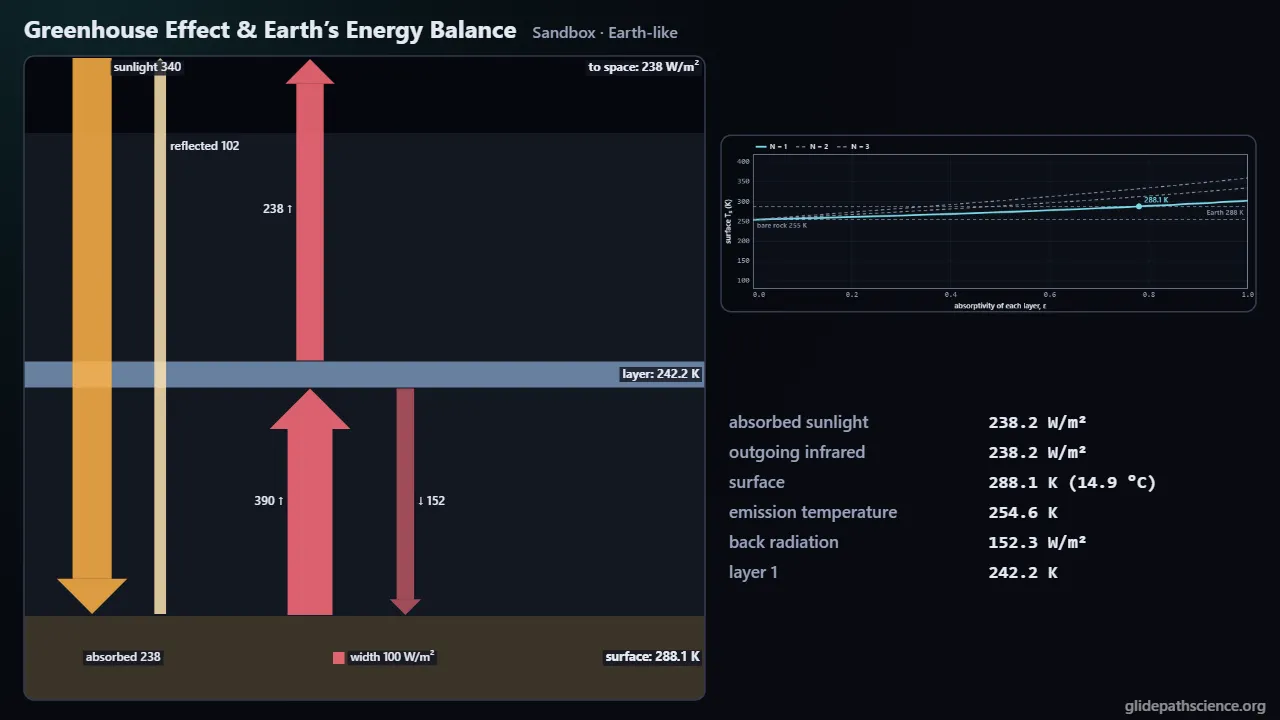
Balance the sunlight a planet absorbs against the infrared it radiates, then add albedo and layers that absorb infrared and watch the surface settle warmer, from bare rock at 255 K to Earth’s 288 K.
 New
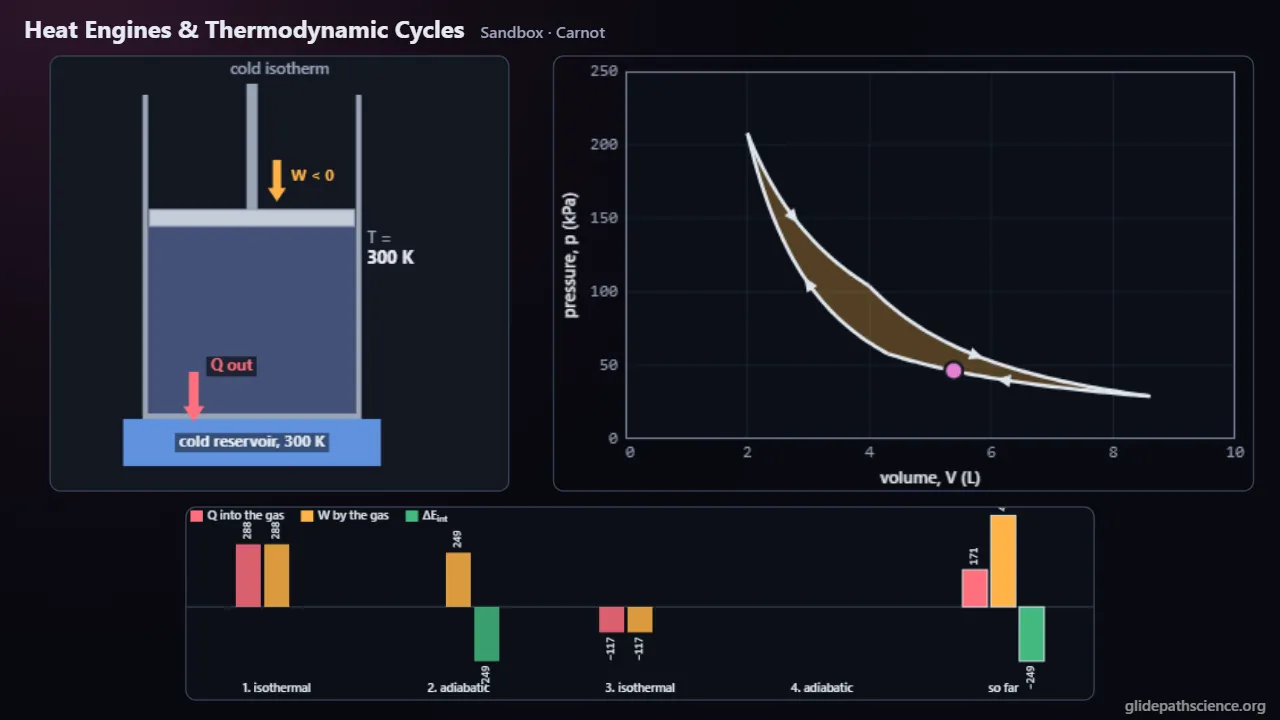
Drive a gas around loops on a pV diagram and keep its books leg by leg, then build Carnot, Otto, Diesel, Brayton and Stirling engines and run them backward as refrigerators and heat pumps.
 New
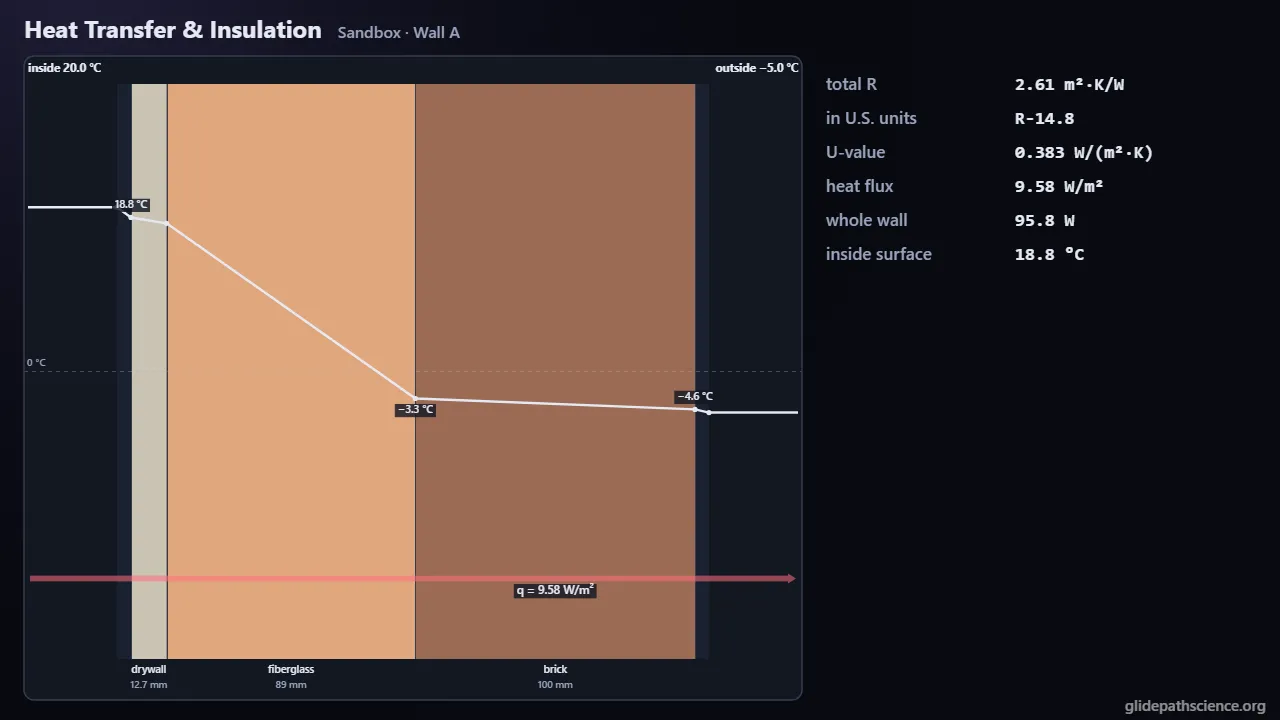
Stack a wall’s layers, choose a window’s panes and gas, and take a vacuum flask apart to see how conduction, convection and radiation carry heat from hot to cold, and how insulation slows it.
 New
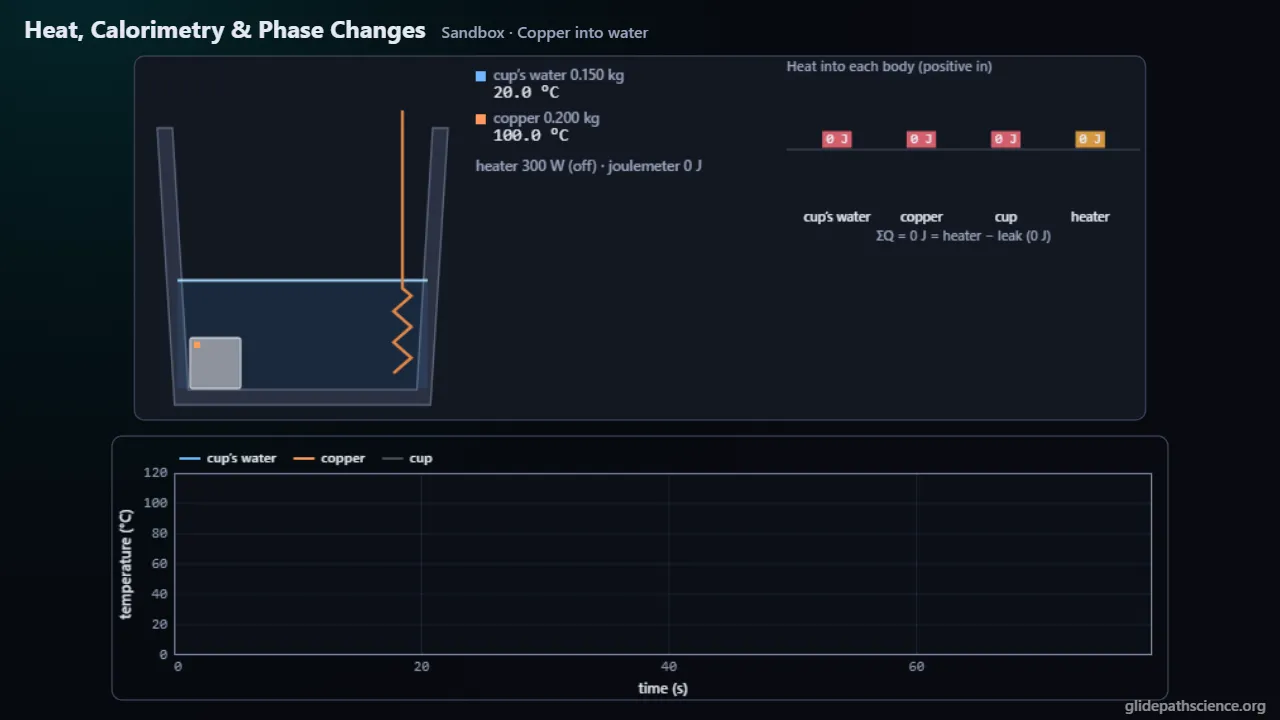
Drop hot metals into a calorimeter to find specific heats, take ice to steam along a heating curve, and see why evaporation cools, what sets the dew point and why humid air feels hotter.
 New
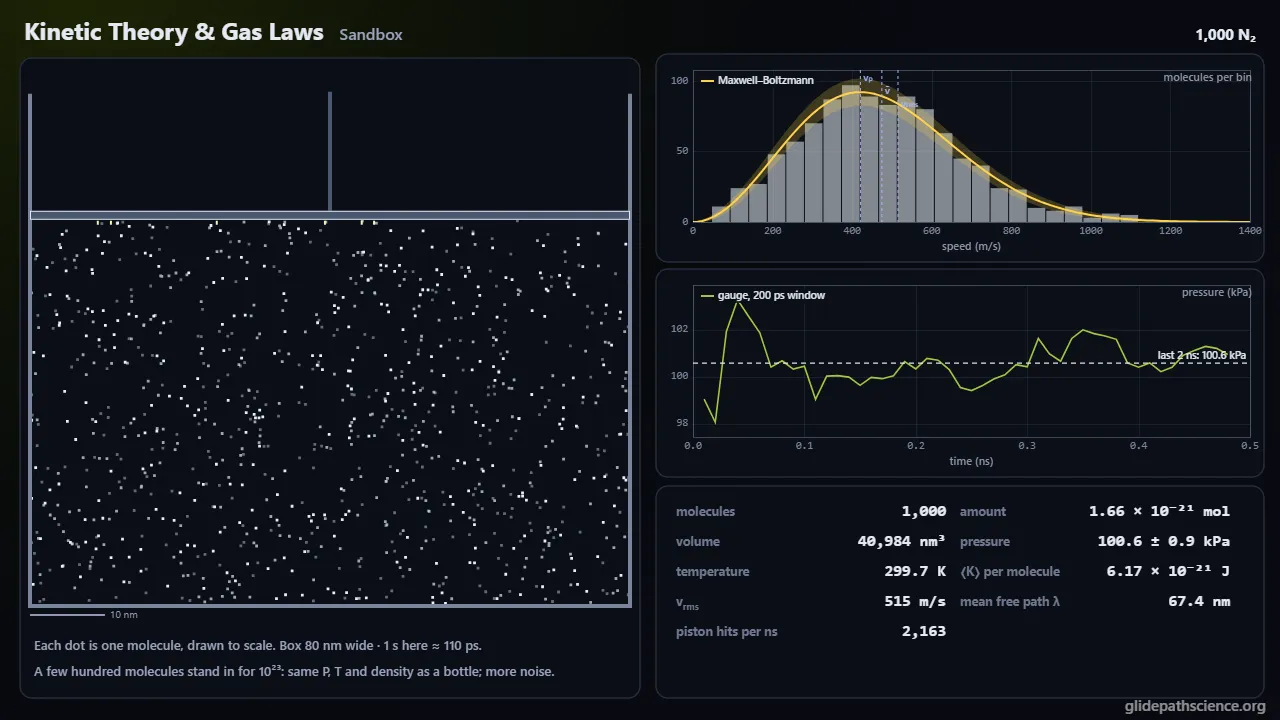
Hundreds of real molecules at true size in an 80 nm box: pressure from their hits, the Maxwell–Boltzmann spread of speeds, and Boyle’s, Charles’s, Gay-Lussac’s, and Avogadro’s laws as experiments with real data.
 New
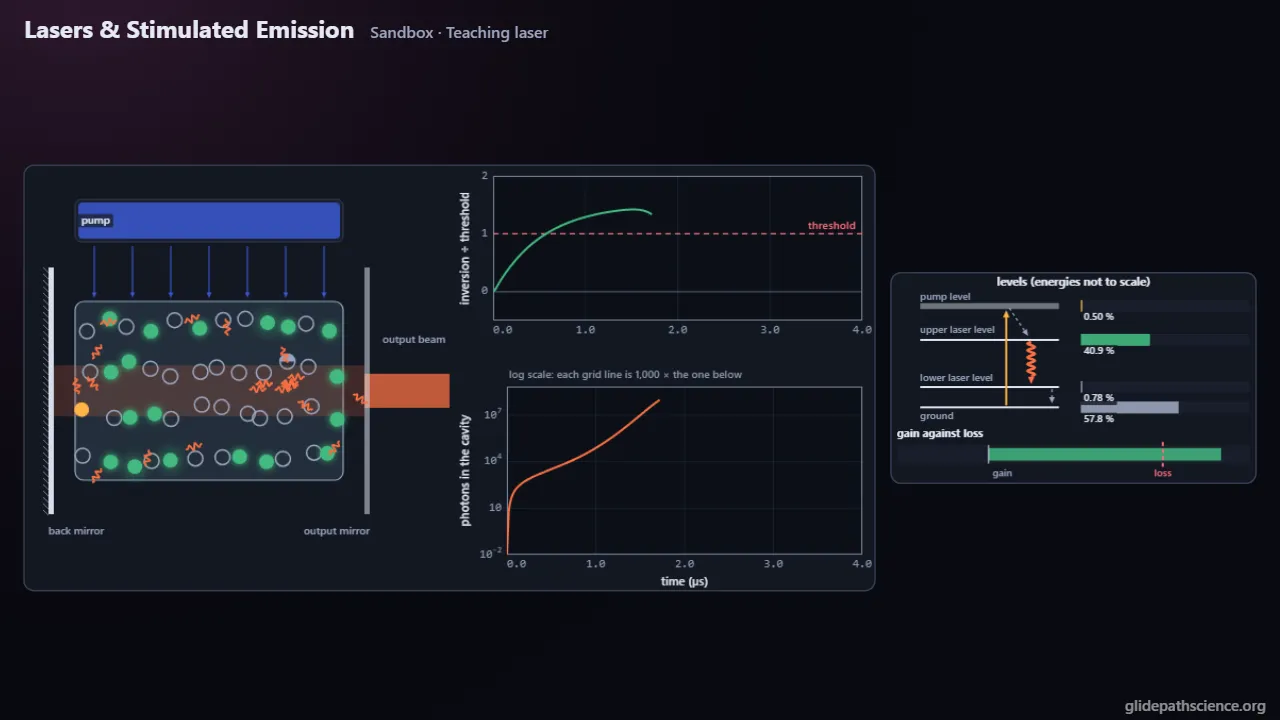
Pump atoms into a population inversion, watch stimulated emission build a coherent beam between two mirrors, find the threshold, and compare pumping schemes, cavity modes and laser light against lamp light.
 New
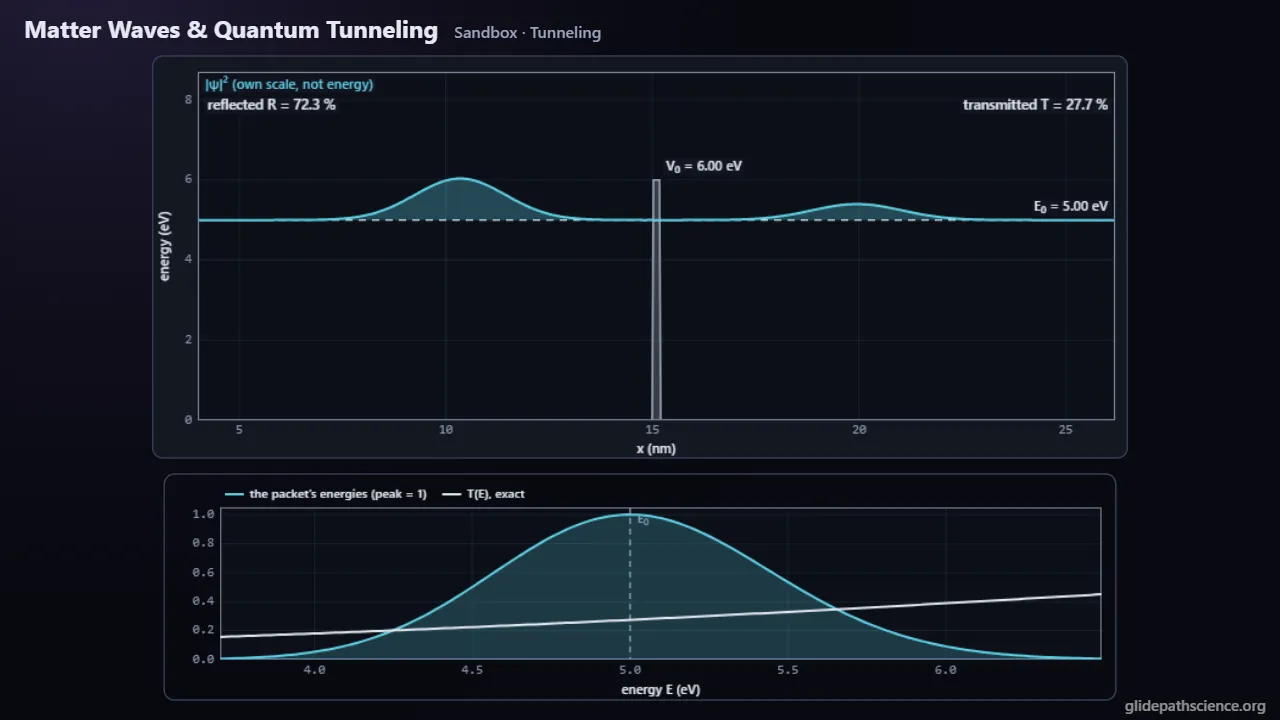
Find an electron’s wavelength and diffract it from a crystal, trap it in a box to see its energy come in steps, then watch a wave packet tunnel through a barrier too high to climb.
 New
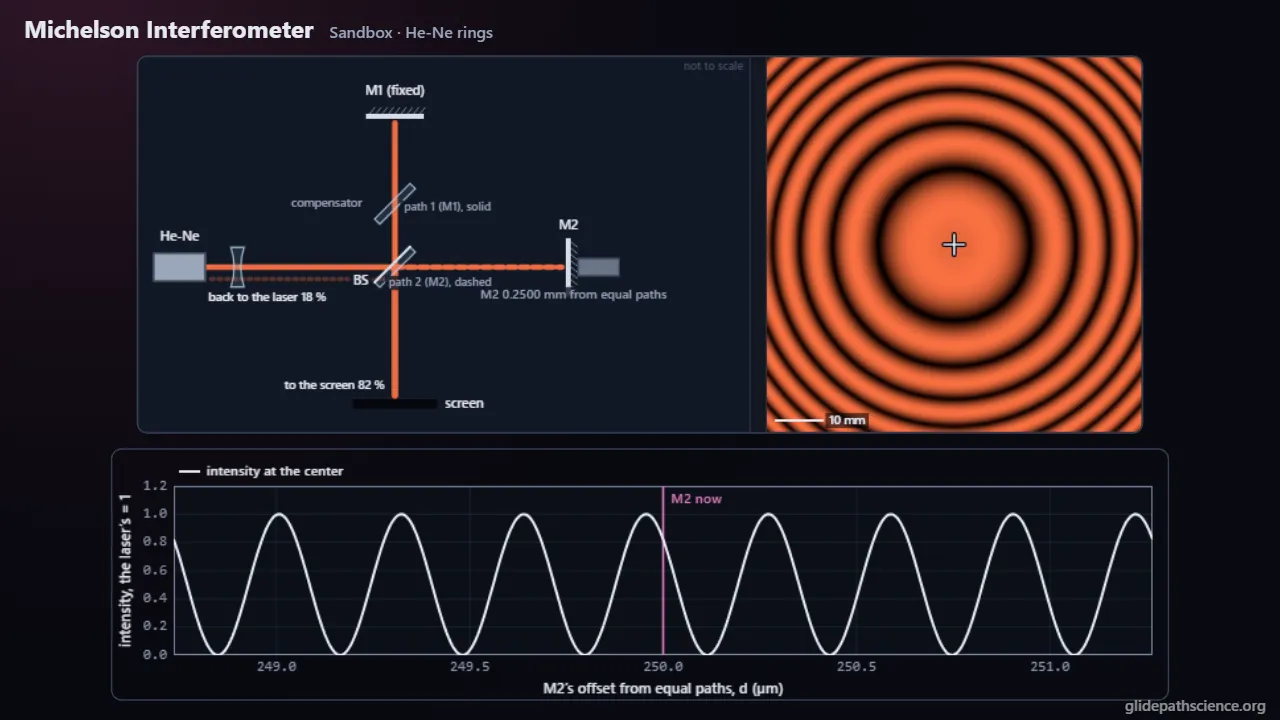
Split one beam into two arms: a quarter-wavelength mirror move turns bright to dark. Align it, count fringes to measure light, find white light’s zero, then scale it up to LIGO’s 4 km arms.
 New
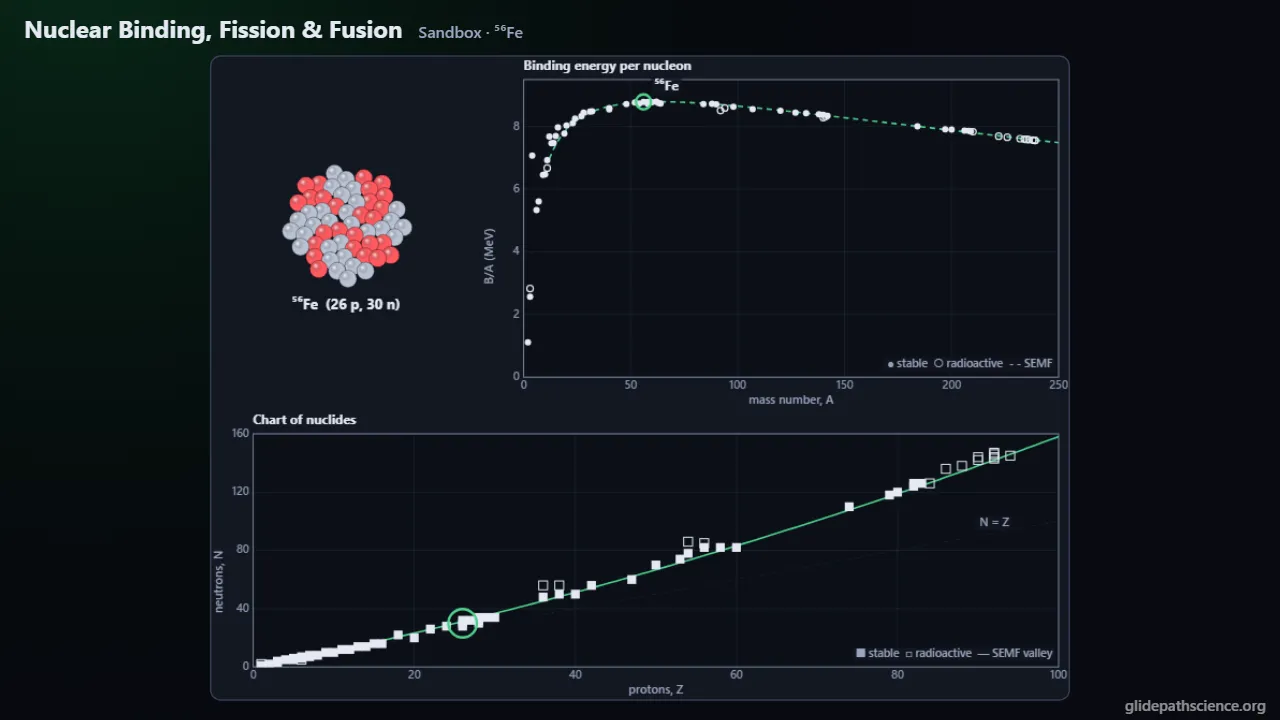
Weigh a nucleus against its parts to find its binding energy, place any nuclide on the binding-energy curve, compose fission and fusion reactions, grow a chain reaction, and see how protons fuse in the Sun.
 New
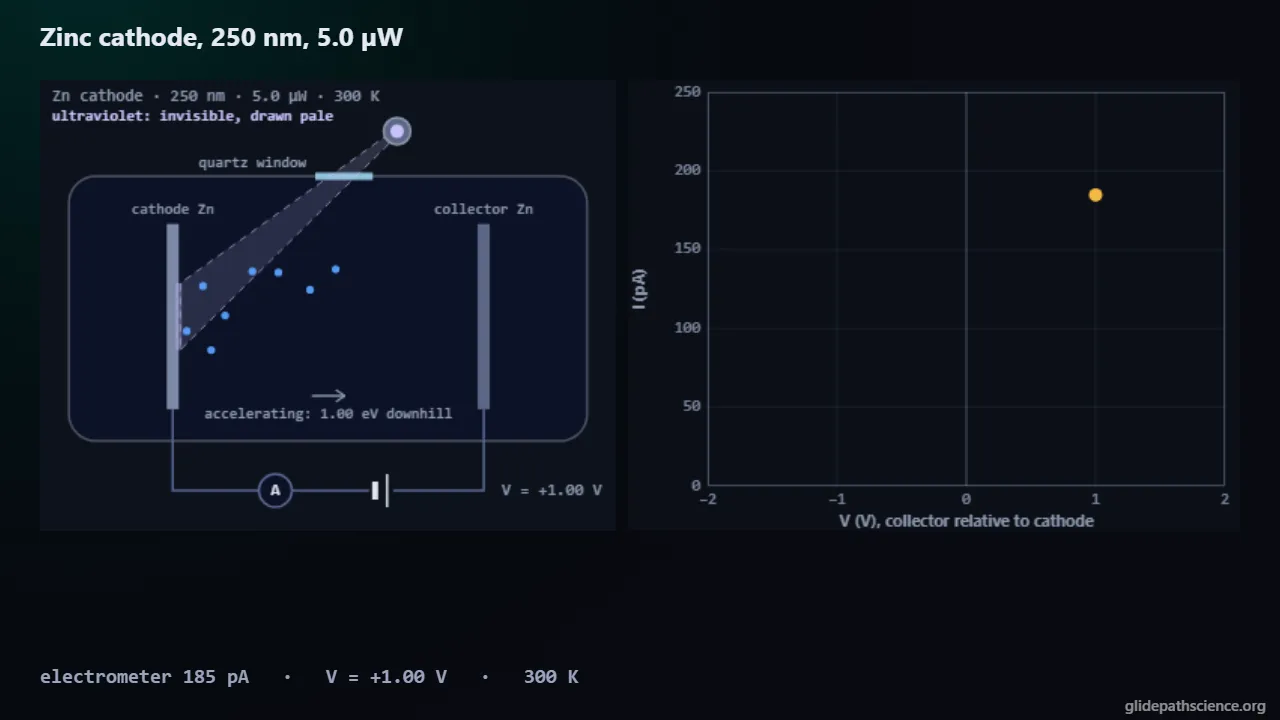
Shine light on a metal: electrons leave only above a threshold color, however bright the lamp. Stop them with a voltage, measure Planck's constant from a Millikan plot, and find whose work function the intercept gives.
 New
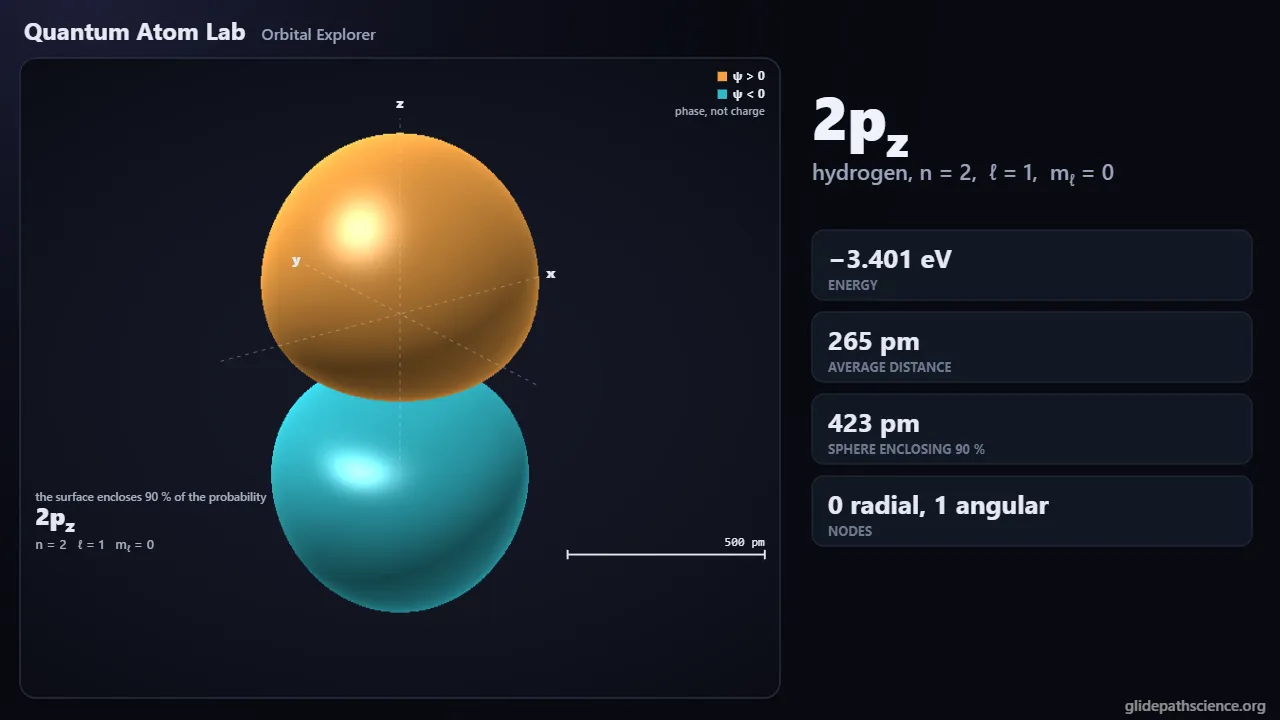
Follow the evidence from line spectra and Bohr's levels to electron waves, explore every hydrogen orbital from 1s to 4f in 3-D, and fill atoms from hydrogen to xenon to explain their ionization energies.
 New
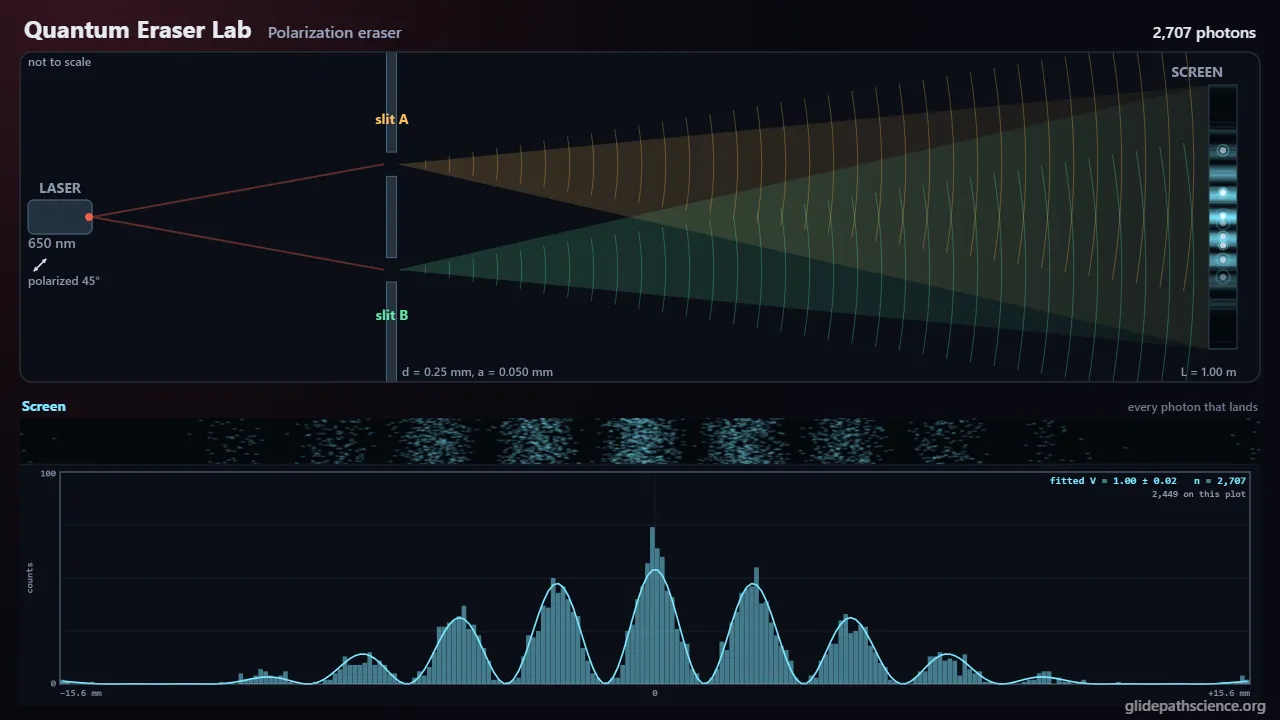
Tag the two paths through a double slit and the fringes vanish; erase the tag and they return, but only in a sorted or filtered subset of the photons, never in the whole pattern.
 New
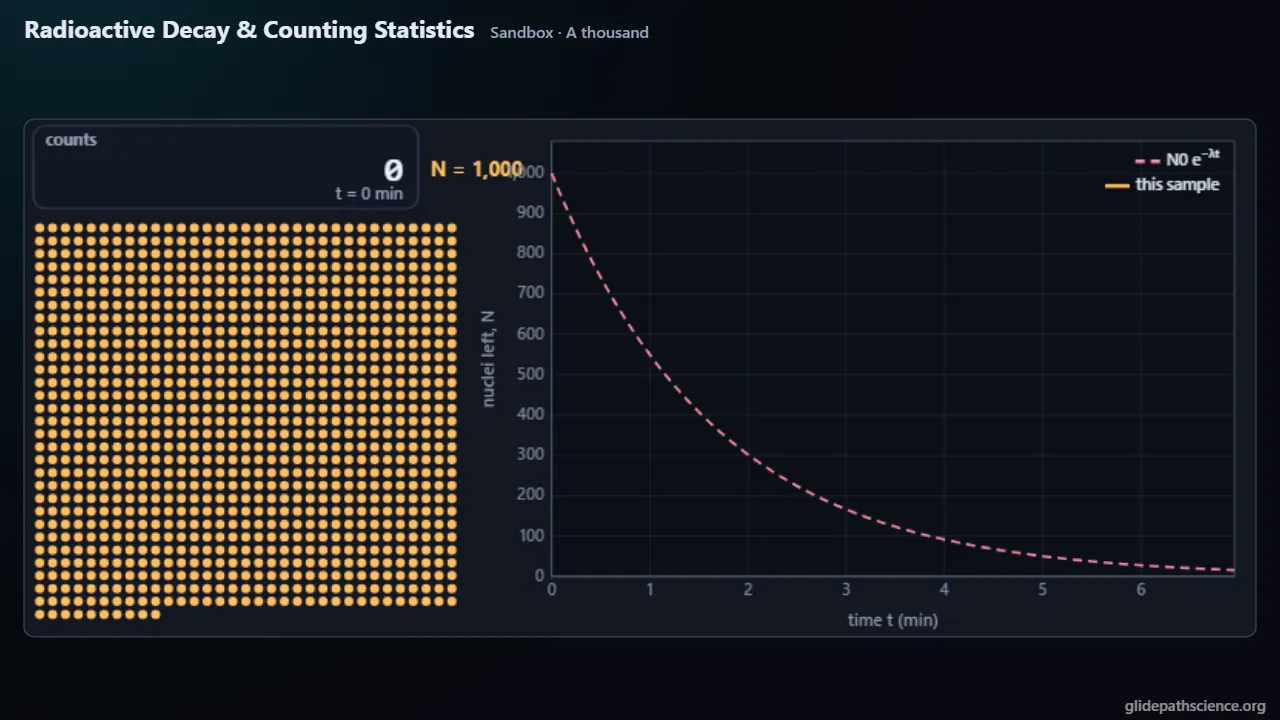
Watch nuclei decay one at a time while a large sample keeps perfect time, then count with a Geiger counter, subtract background, learn how long to count, and date charcoal by its carbon-14.
 New
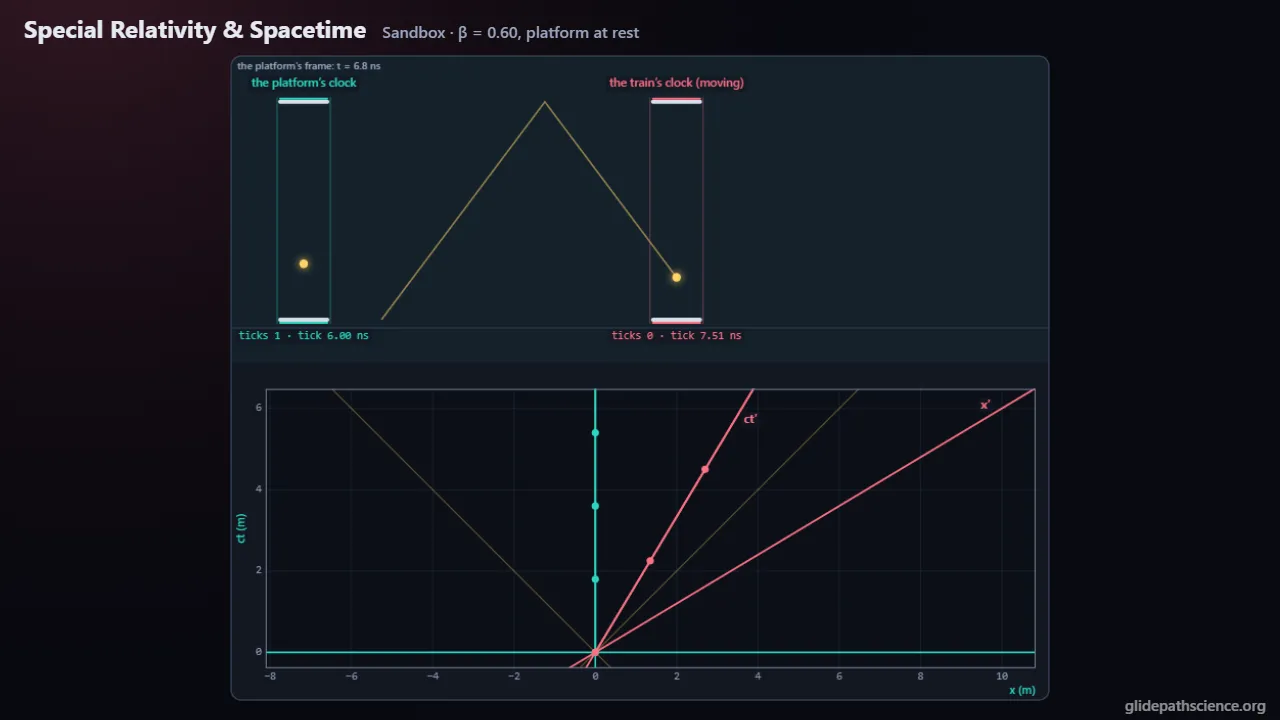
One speed of light for everyone, so clocks and rulers disagree: light clocks, time dilation, contraction, the lightning train, spacetime diagrams, a twin's voyage by birthday signals, muons and GPS clocks.