
 New
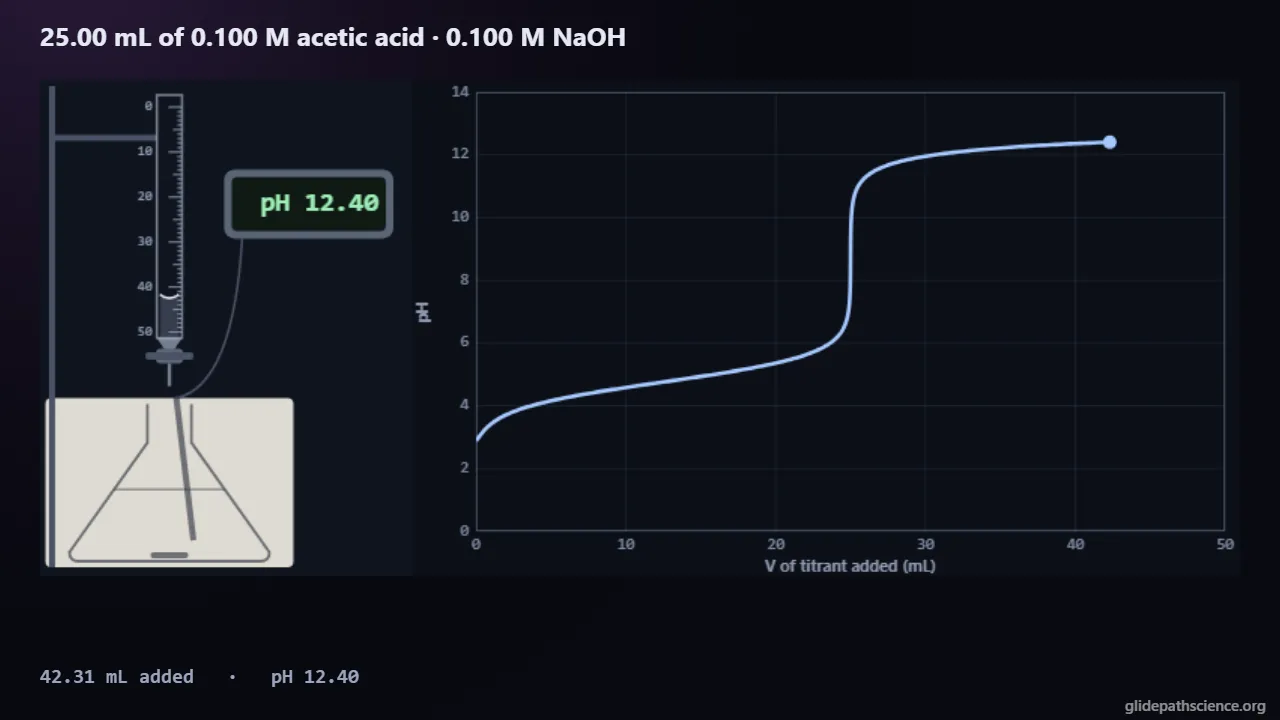
Acid–Base Titration Lab
Titrate acids and bases with a buret and a pH meter: see why equivalence is not neutral, how buffers resist, how to choose an indicator, and how to get Vₑ, the concentration and Kₐ from noisy data.
Subject
Atoms, bonding, reactions, and molecular structure.
NewTitrate acids and bases with a buret and a pH meter: see why equivalence is not neutral, how buffers resist, how to choose an indicator, and how to get Vₑ, the concentration and Kₐ from noisy data.
 New
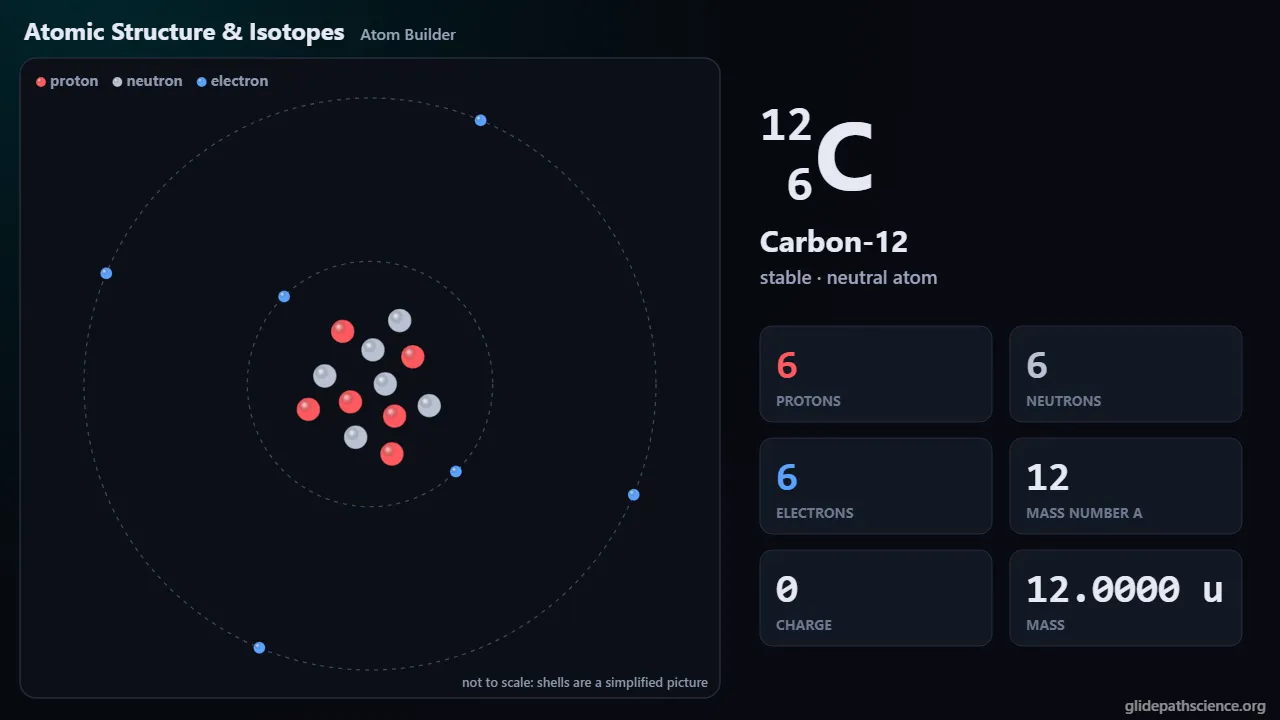
Build atoms and ions particle by particle, read isotope notation, compute weighted average atomic masses, and measure real isotope abundances on a simulated mass spectrometer for hydrogen through krypton.
 New
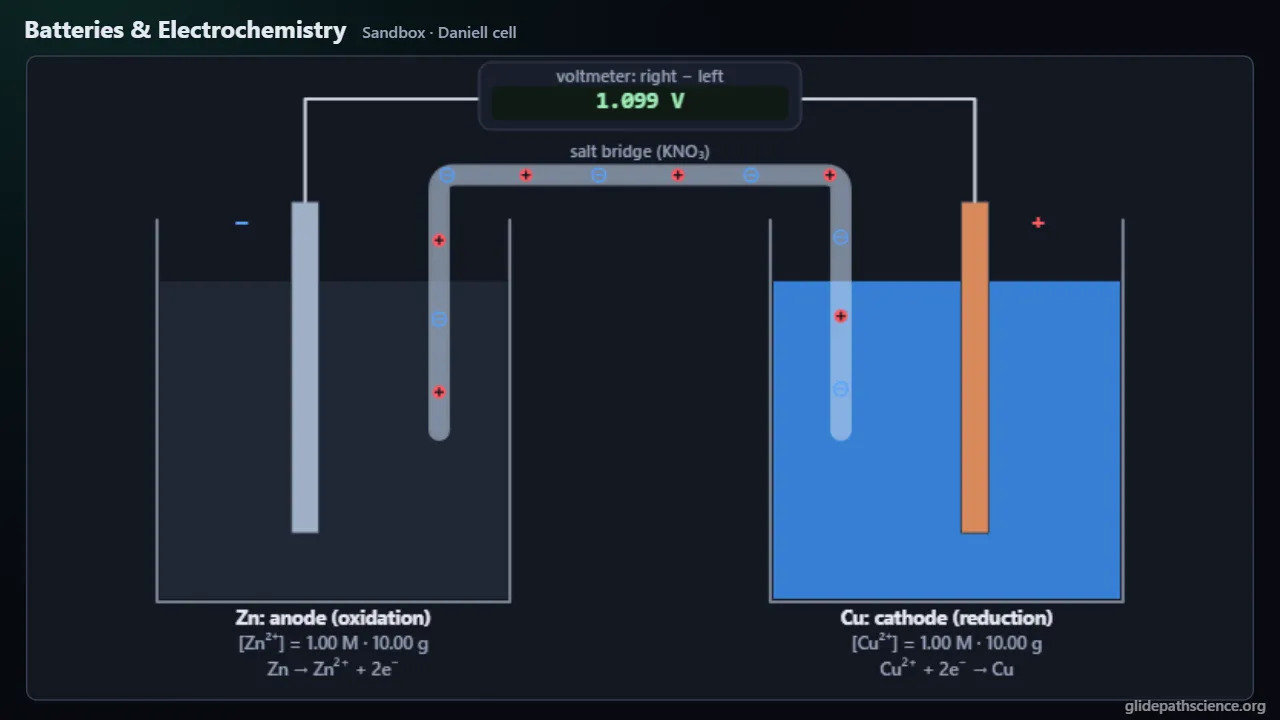
Build galvanic cells from metals and solutions, follow the voltage through the Nernst equation as a cell runs down, light an LED with lemons, and find where a battery’s energy really comes from.
 New
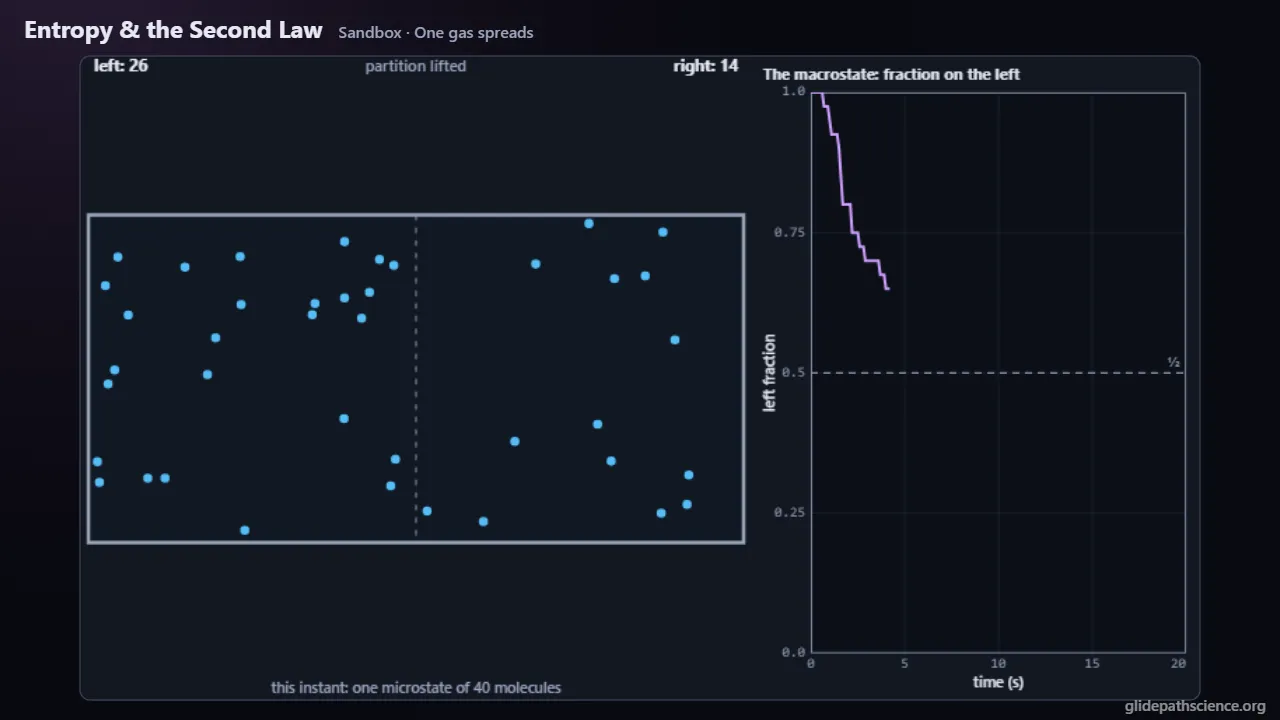
Count the ways coins can land and molecules can sit, watch a gas spread and never come back, let two solids share energy until their temperatures match, and stretch a rubber band that warms.
 New
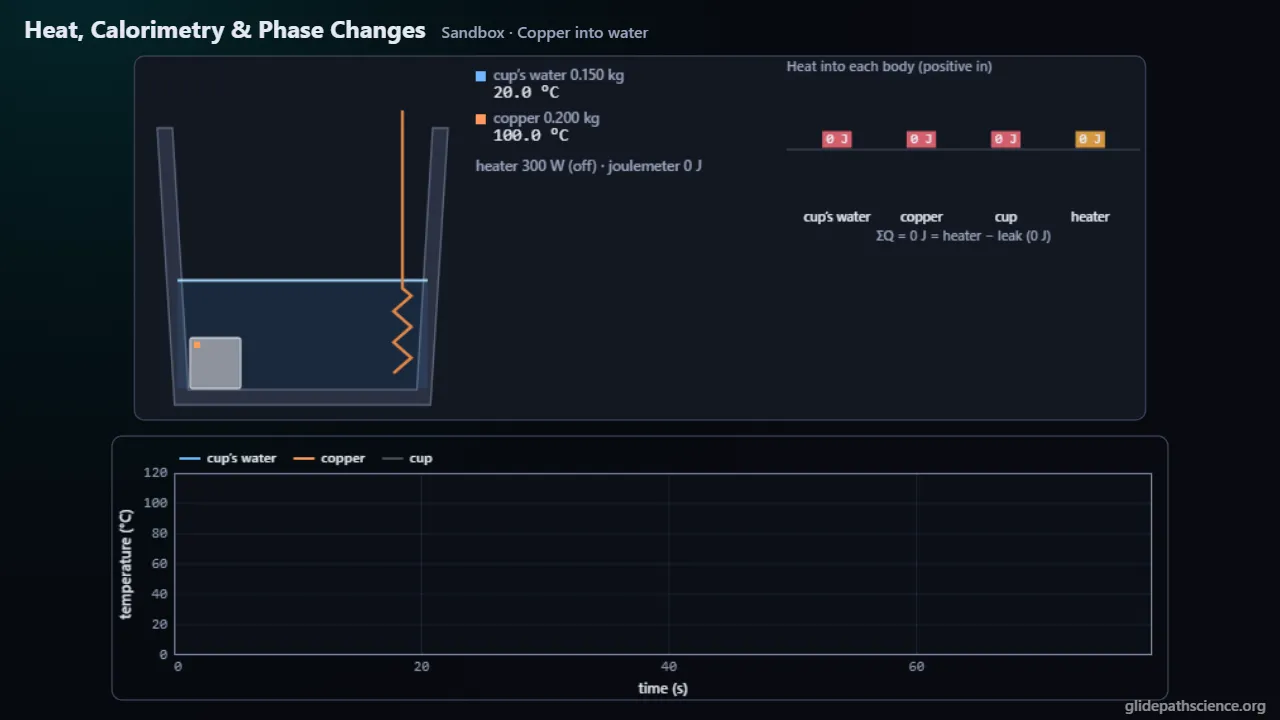
Drop hot metals into a calorimeter to find specific heats, take ice to steam along a heating curve, and see why evaporation cools, what sets the dew point and why humid air feels hotter.
 New
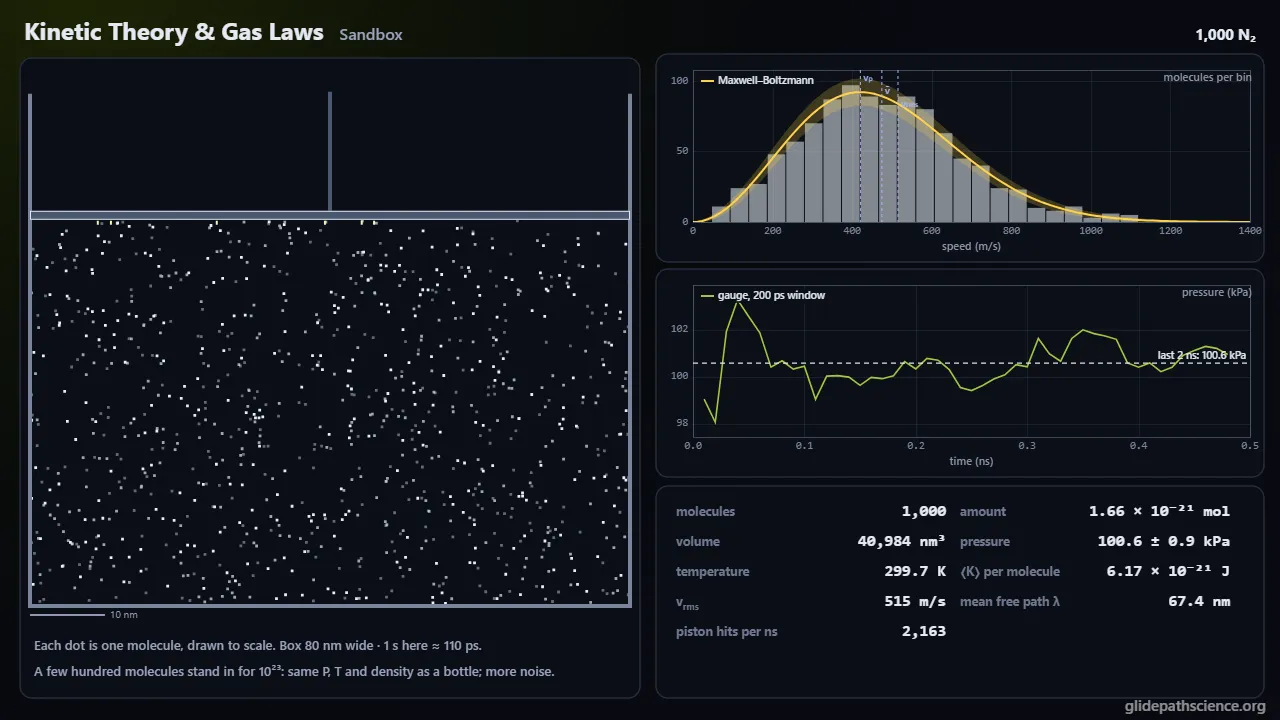
Hundreds of real molecules at true size in an 80 nm box: pressure from their hits, the Maxwell–Boltzmann spread of speeds, and Boyle’s, Charles’s, Gay-Lussac’s, and Avogadro’s laws as experiments with real data.
 New
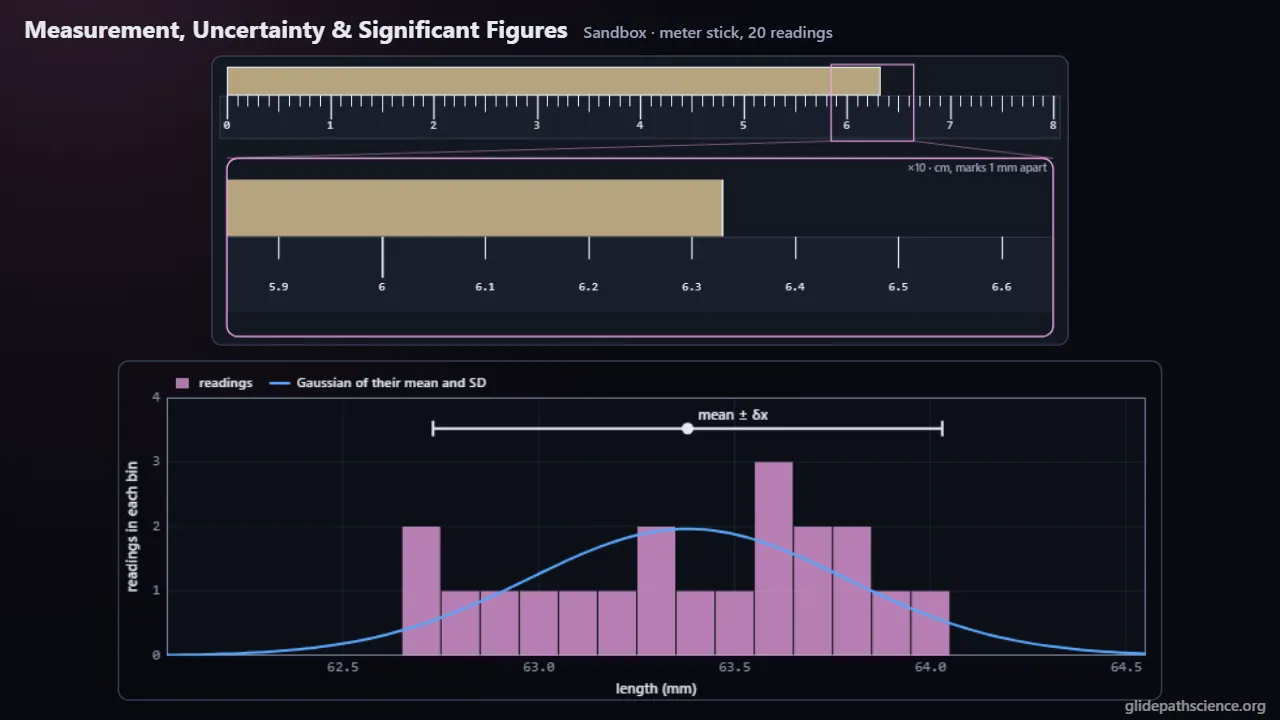
Read a ruler, a vernier caliper, a micrometer and a stopwatch, repeat the readings, and carry their uncertainty through a formula to see what significant figures mean and when two results agree.
 New
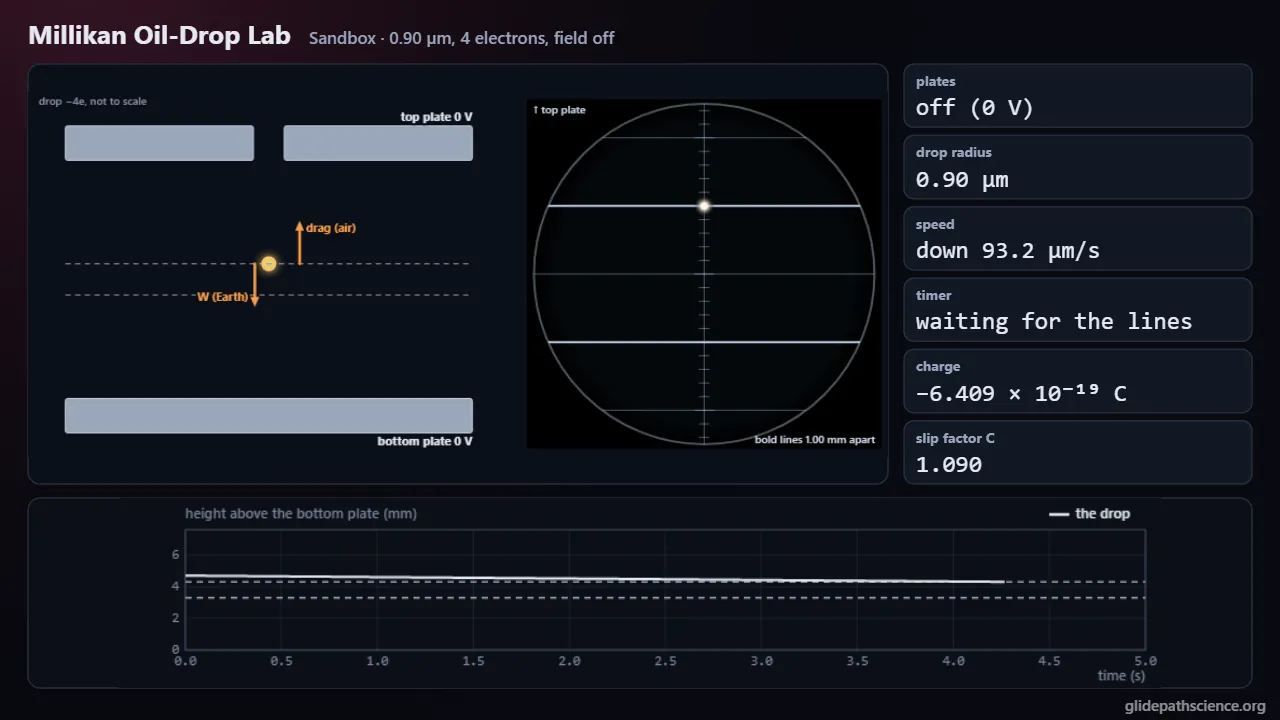
Measure the electron’s charge as Millikan did: time oil drops falling and rising through a microscope with your own stopwatch, find e with an honest uncertainty, and re-analyze his 1913 drops.
 New
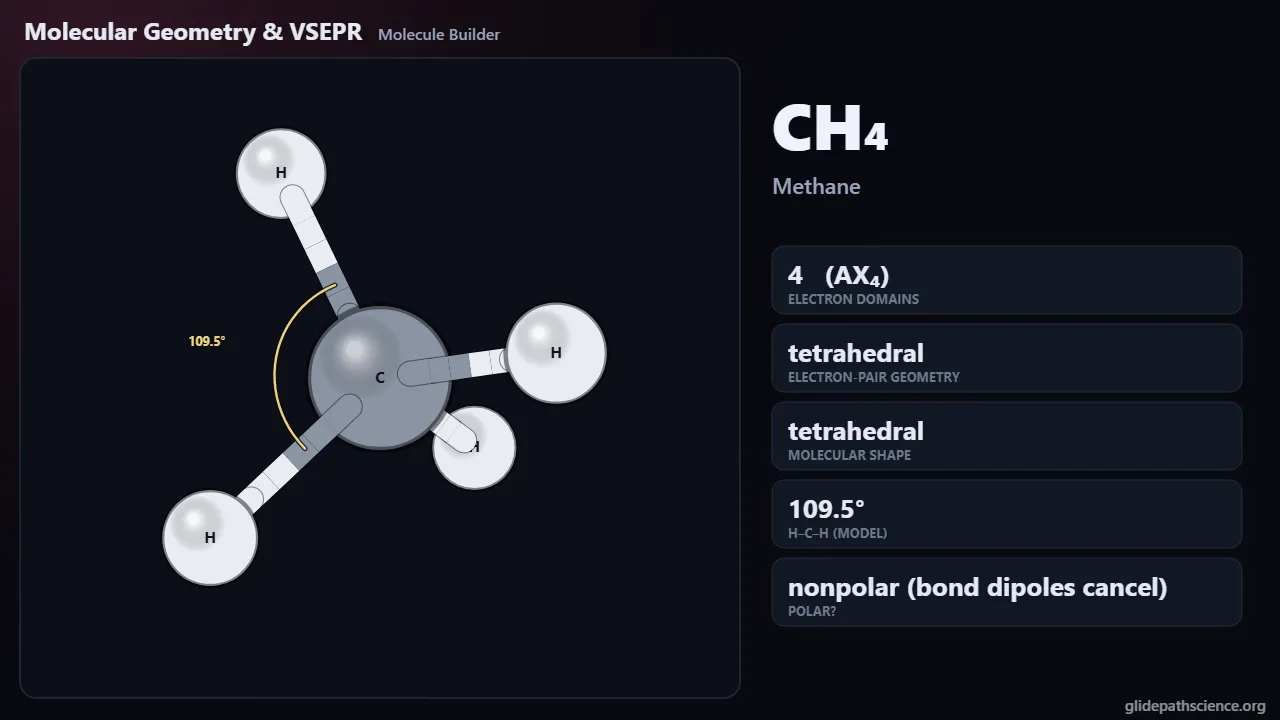
Build molecules around a central atom and watch electron pairs relax into shape. Count domains from Lewis structures, see lone pairs squeeze angles, compare the model with measured molecules, and add bond dipoles in 3-D.
 New
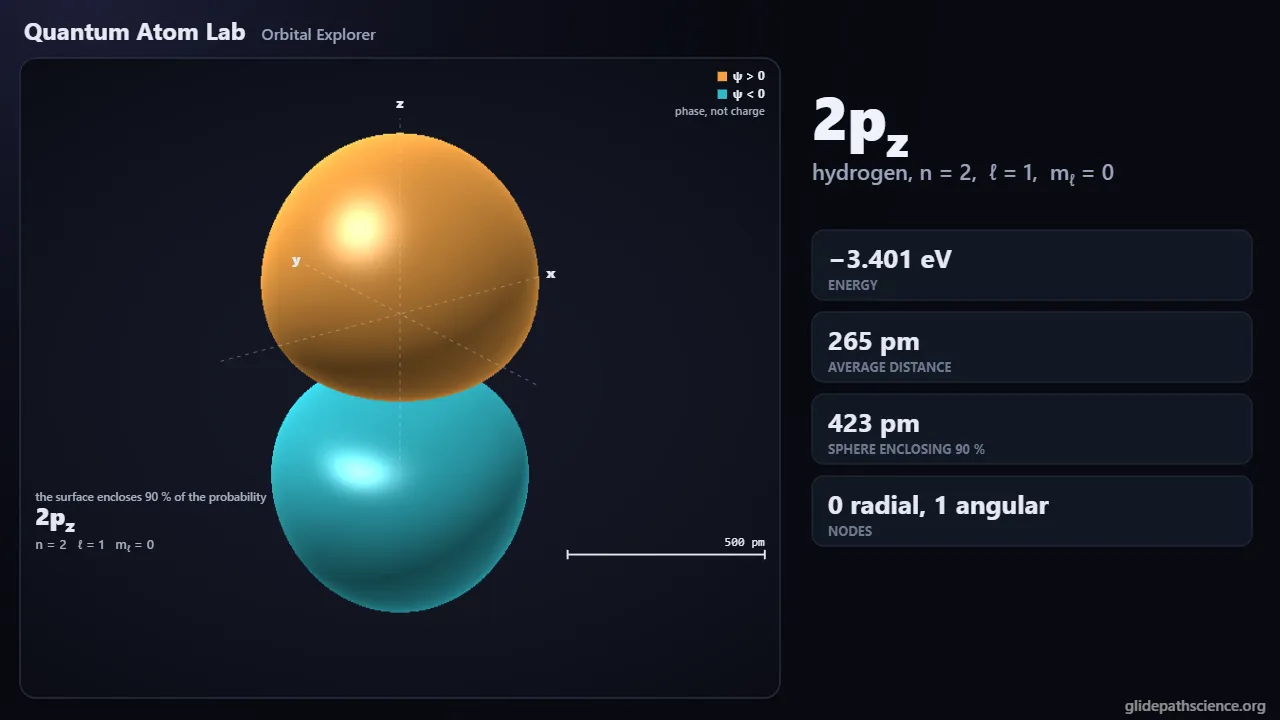
Follow the evidence from line spectra and Bohr's levels to electron waves, explore every hydrogen orbital from 1s to 4f in 3-D, and fill atoms from hydrogen to xenon to explain their ionization energies.
 New
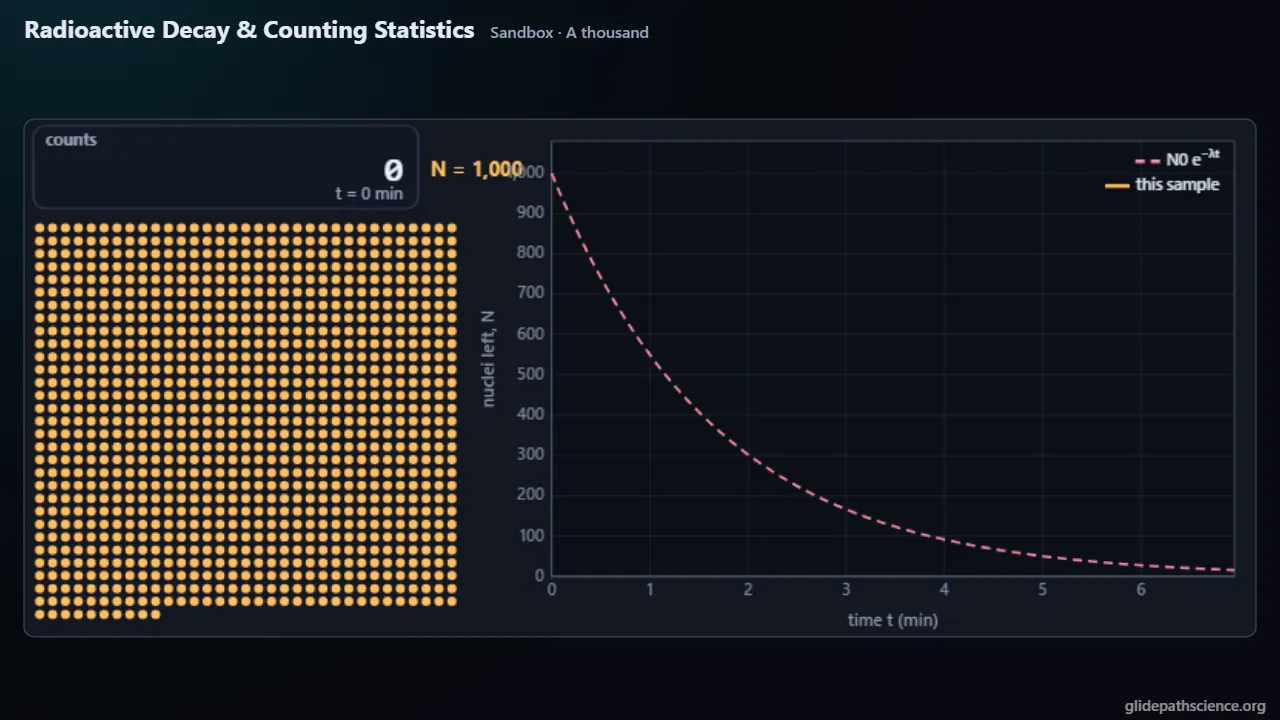
Watch nuclei decay one at a time while a large sample keeps perfect time, then count with a Geiger counter, subtract background, learn how long to count, and date charcoal by its carbon-14.
 New
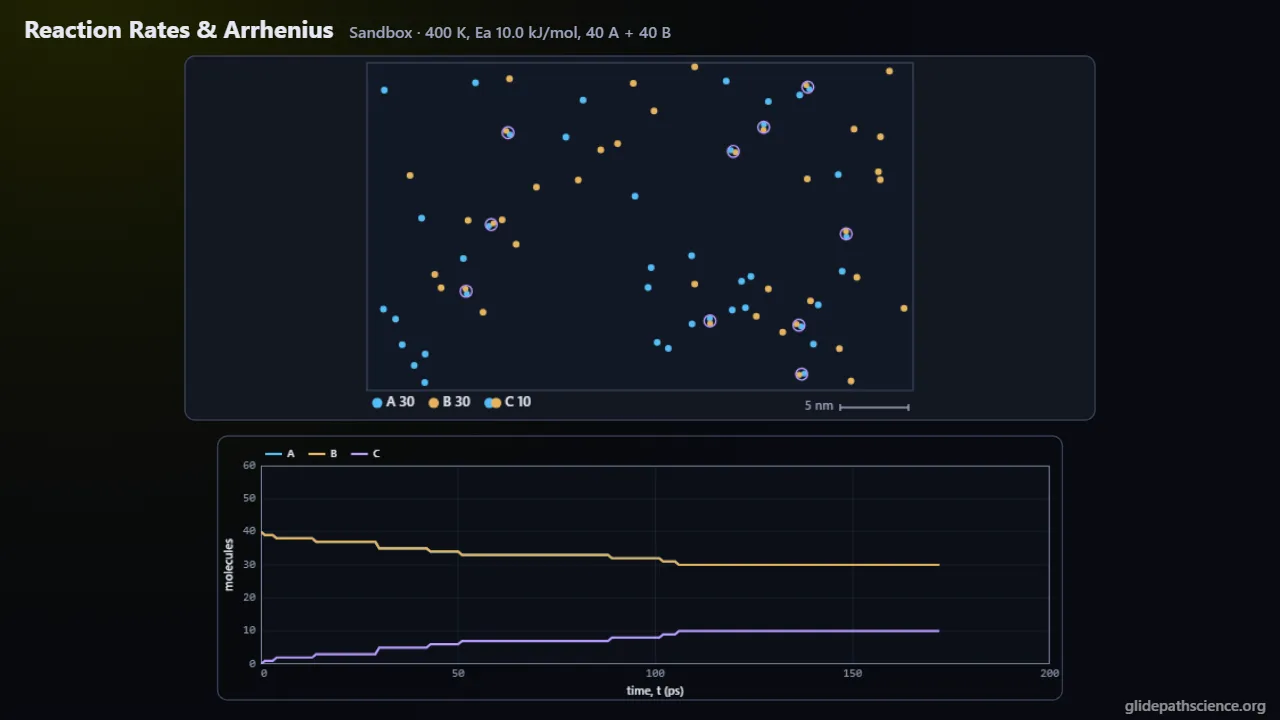
Watch molecules collide in a box and react only when they hit hard enough and the right way round, then find a rate law from initial rates and the activation energy from an Arrhenius plot.
 New
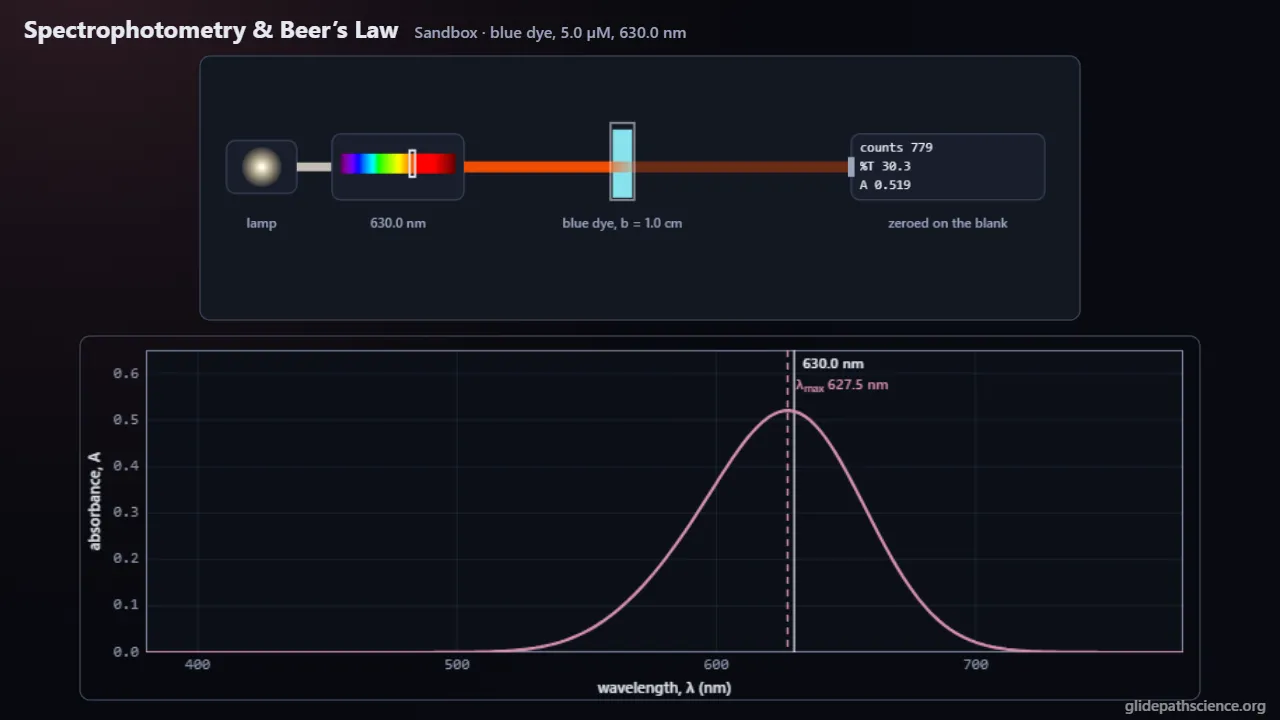
Shine one color of light through a dye, turn %T into absorbance, find λmax and watch A grow with concentration and path, then build a calibration line from standards and find an unknown.