
 New
Altitude & Hypoxia
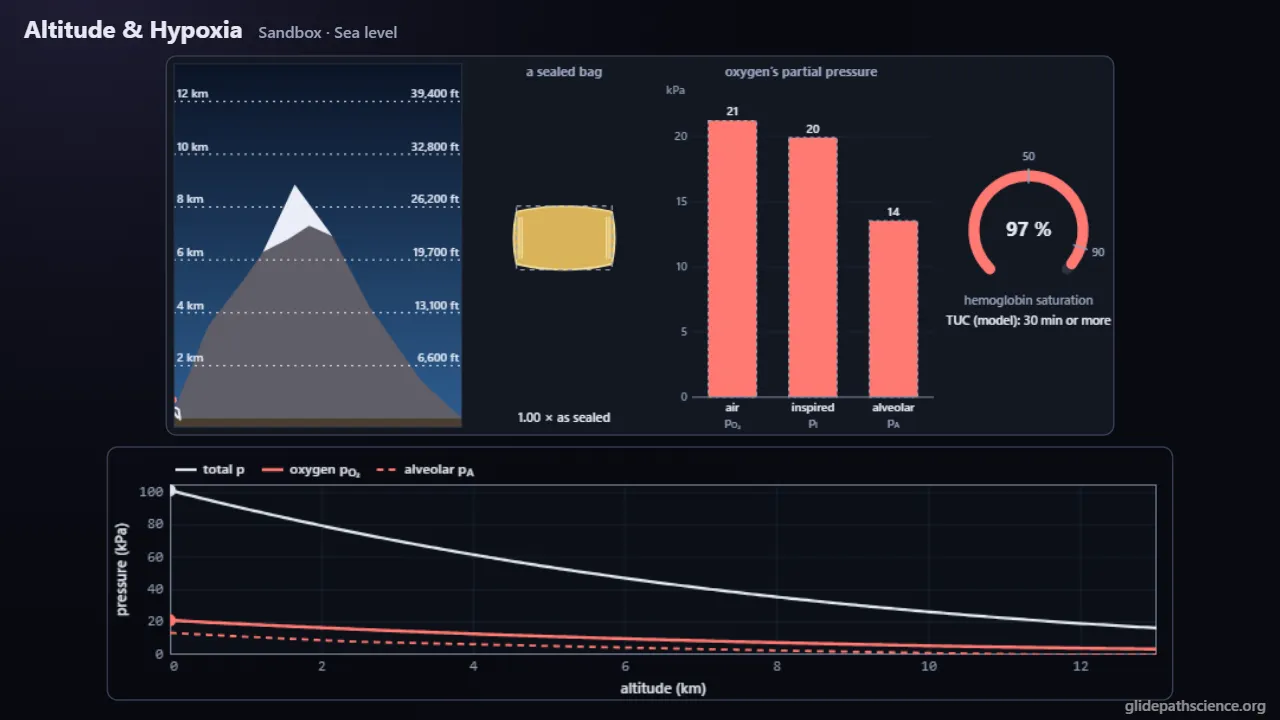
Climb to 12,200 m and watch the air thin: oxygen’s partial pressure falls, hemoglobin holds on then lets go, sealed bags swell, and useful consciousness shrinks to seconds; then lose a cabin’s pressure.
Subject
Weather, climate, the atmosphere, and the planet beneath it.
NewClimb to 12,200 m and watch the air thin: oxygen’s partial pressure falls, hemoglobin holds on then lets go, sealed bags swell, and useful consciousness shrinks to seconds; then lose a cabin’s pressure.
 New
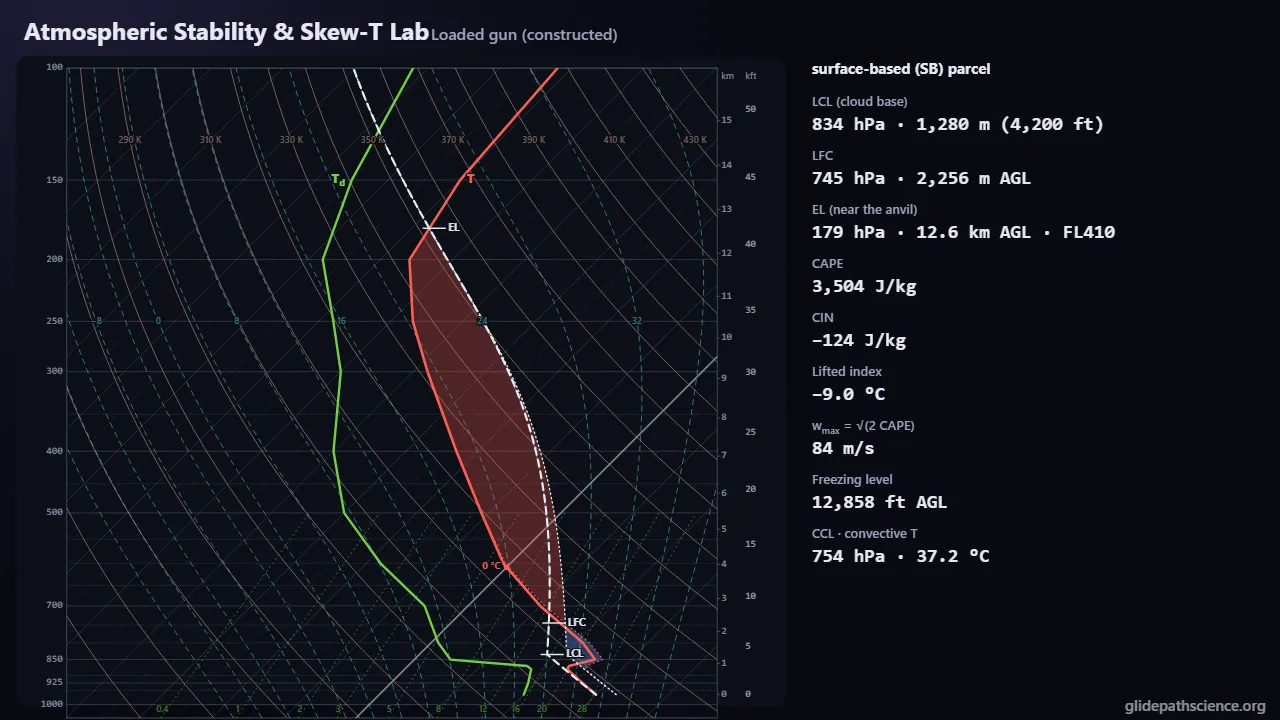
Read a weather-balloon sounding on a skew-T log-P diagram: lift parcels to the cloud base, LFC and anvil, measure CAPE and CIN as areas, and read storms, icing and cloud bases.
 New
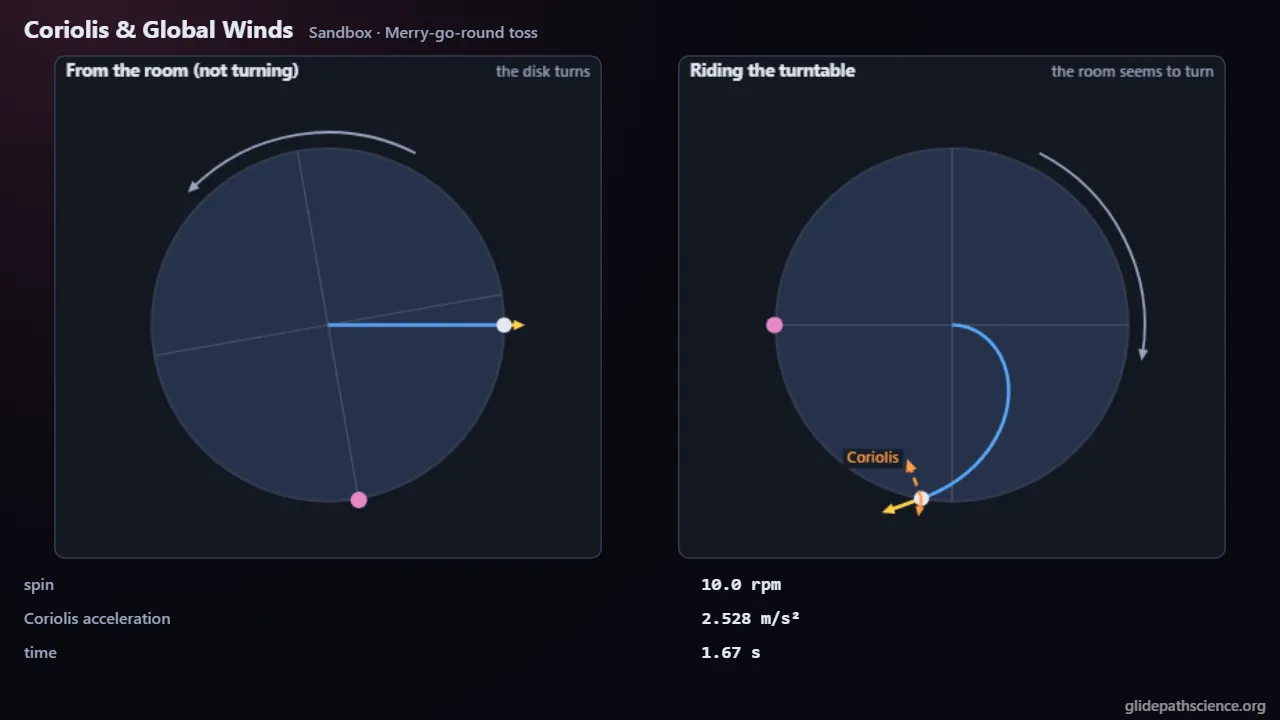
Watch a puck from the room and from a spinning turntable, then let air feel a pressure gradient and the Coriolis effect until it blows along the isobars, and see why storms spin.
 New
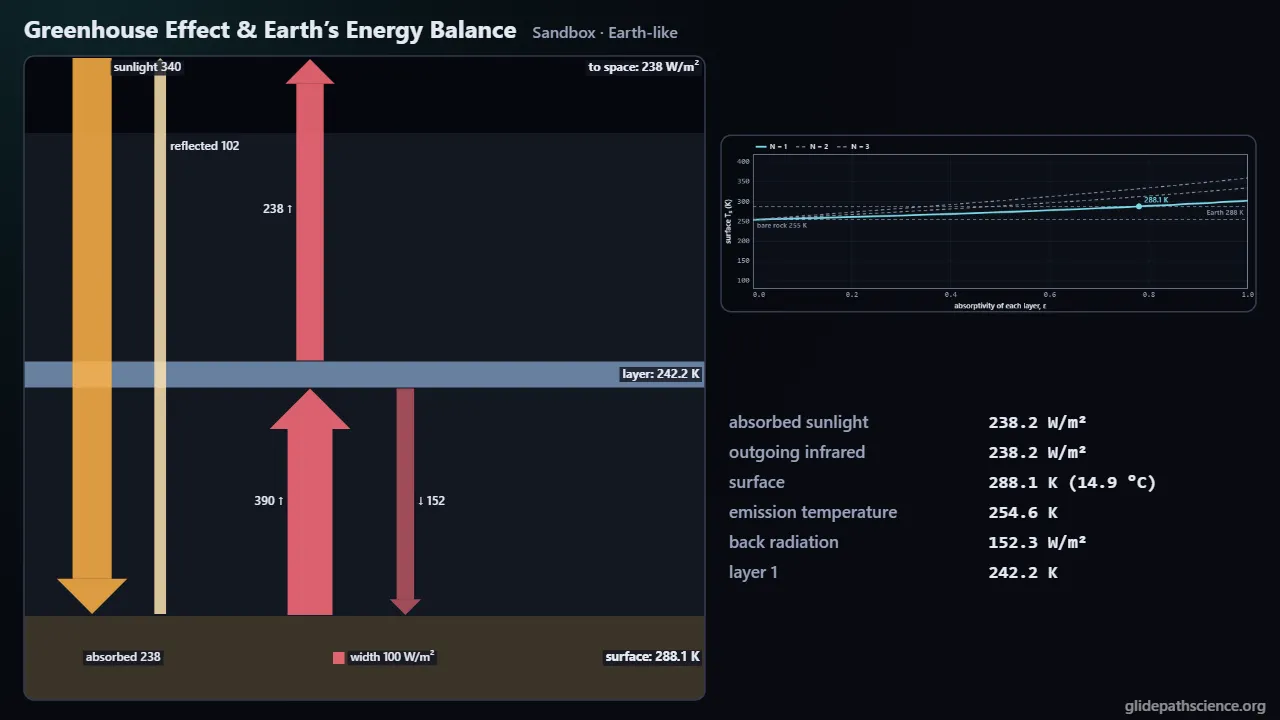
Balance the sunlight a planet absorbs against the infrared it radiates, then add albedo and layers that absorb infrared and watch the surface settle warmer, from bare rock at 255 K to Earth’s 288 K.